Best Fly Line for Trout
The best all round trout fly line is the RIO Premier Gold WF5F at under $100, a general purpose weight forward taper that presents dry flies and still carries a light nymph rig. Under the AFFTA standard a 5 weight line weighs 140 grains in its first 30 feet plus or minus 6, though many modern trout lines are built half a size to a full size over that on purpose.
Fly line is the highest-value upgrade in the whole sport, and almost nobody spends there first. A rod does not cast a fly, it casts a line, and the fly goes along for the ride. That means the taper and coating in front of you determine how a cast feels far more than the blank does. A $90 rod with a $100 line outcasts a $400 rod with a $25 line, reliably. The lines below are compared on published taper and grain specifications alongside verified owner reviews, and the differences between them are real and easy to feel.
How is a fly line's weight actually defined?
Under the AFFTA standard, a fly line's weight class is set by the mass in grains of its first 30 feet, excluding any level tip. A 5 weight line is 140 grains, with a tolerance of plus or minus 6. That is the entire definition, and it explains why line weight and rod weight are the same number: a 5 weight rod is a blank engineered to bend correctly with roughly 140 grains outside the tip.
| Class | Grains | Tolerance | Half size heavy | Typical use |
|---|---|---|---|---|
| 1 weight | 60 | ±4 | 70 | Tiny streams, brook trout |
| 2 weight | 80 | ±6 | 90 | Panfish, small dries |
| 3 weight | 100 | ±6 | 110 | Small stream trout |
| 4 weight | 120 | ±6 | 130 | Spring creeks, delicate presentation |
| 5 weight | 140 | ±6 | 150 | The all round trout line |
| 6 weight | 160 | ±8 | 172 | Wind, indicator rigs, small streamers |
| 7 weight | 185 | ±8 | 197 | Bass, big streamers |
| 8 weight | 210 | ±8 | 225 | Salt flats, pike |
Read the tolerance column carefully, because it is the source of most confusion. A legal 5 weight can be 134 grains or 146 grains, a spread of 9 percent, and both are inside the standard. Now add the industry habit of building trout lines deliberately over standard, and two lines both marked WF5F can be 20 grains apart. That is the difference between a rod feeling dead and a rod feeling loaded, and it is why "my rod does not cast well" is so often a line problem. Feed your rod's rating into the line weight calculator and it tells you what grain window to shop in.
What do the letters in WF5F mean?
The code carries three facts. The letters at the front are the taper, the number is the AFFTA class, and the letter at the end is whether it floats or sinks.
WF, weight forward. The mass sits in a head of roughly 35 to 45 feet, with thin running line behind. It loads a rod quickly and shoots well, which is why it is the default for almost all trout fishing.
DT, double taper. Symmetrical, with the same taper at both ends and a long level belly. It presents very softly at short range, mends beautifully because there is mass where you need it, and can be reversed when one end wears out. It shoots poorly past about 40 feet. The full argument sits in weight forward against double taper.
F is floating, S is sinking, F/S is a sinking tip. A sinking tip line, like the Scientific Anglers Sonar Titan Sink Tip, WF7F/S3 , floats for most of its length and sinks in the front 10 to 15 feet, which is the practical way to fish streamers without giving up mending. The taper chart maps the common codes to what they are for.
Which taper should you buy for trout?
The honest answer is a general purpose weight forward floater, and the reason is that trout fishing changes technique every hour. You start with a nymph rig, switch to a dry when a hatch starts, then swing a soft hackle at dusk. A specialised line makes one of those better and the other two worse.
The RIO Premier Gold Fly Line, WF5F at under $100 is the reference point for this. A long front taper lets a size 18 dry land without a slap, and there is enough mass behind it to turn over a bead head nymph and a split shot. It has stayed in the market for years because it does not have a weakness that shows up at the wrong moment.
The Scientific Anglers Amplitude Smooth Infinity, WF5F at under $100 is the same broad idea with a substantially slicker coating. What that buys is shooting distance and resistance to grit, plus a line that keeps floating high for longer. It is a real difference and you will feel it within a few casts. It is also a difference that a caster with an open loop cannot exploit.
The Scientific Anglers Frequency Boost Fly Line, WF5F at under $50 is a deliberate specialist: half a size heavy with a short, aggressive front taper. It exists to load stiff rods at short range and to punch weighted rigs. On a fast blank like the Redington Vice Fly Rod, 9ft 5wt 4pc it makes the rod feel alive at 20 feet. On a moderate rod it feels overloaded and lands hard.
The Orvis Clearwater Fly Line, WF floating at under $50 is the value option and its strongest feature is not the taper, it is the welded loops at both ends. Those remove the nail knot at the leader end and the backing knot at the rear, which are the two knots most likely to stop a new angler getting on the water at all.
Best trout fly lines, by tier

Orvis Clearwater Fly Line, WF floating
A weight forward floating line with welded loops at both ends, which removes the two knots most likely to defeat a new angler. The taper is unremarkable and the coating is honest, and at this price nothing else gives you a proper welded loop system.
Best for: A first line upgrade, or replacing the unbranded line that came in a budget combo.
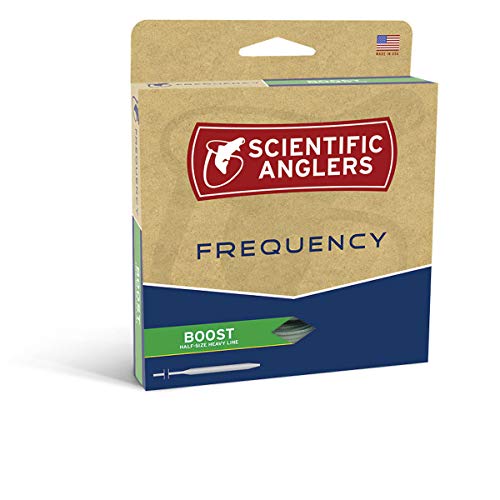
Scientific Anglers Frequency Boost Fly Line, WF5F
Built deliberately half a size heavy with a short, aggressive front taper, so a fast rod loads at 20 to 30 feet instead of feeling dead. That is the specific fix for a stiff blank that will not come alive at close range.
Best for: Fast action rods, short casts, weighted nymph rigs and streamers.
Skip it if: Slow glass and moderate action rods, which are already loading easily and will feel overloaded and sloppy with extra grains.

RIO Premier Gold Fly Line, WF5F
The long-standing all round trout taper. A long front taper for a delicate turnover, a mid-length head for mending, and enough mass forward to carry a small nymph rig. It does not specialise, which on a single trout line is the point.
Best for: One line on a 9 foot 5 weight that has to do dries, nymphs and light streamers.

Scientific Anglers Amplitude Smooth Infinity, WF5F
The same all round idea with a much slicker coating. It shoots further through the guides, picks up less grit, and stays floating higher for longer, which is where a premium line genuinely earns the gap.
Skip it if: Anyone still learning to cast. A slicker line does not fix an open loop, and this money buys more fishing as a second leader pack, tippet and a guided day.
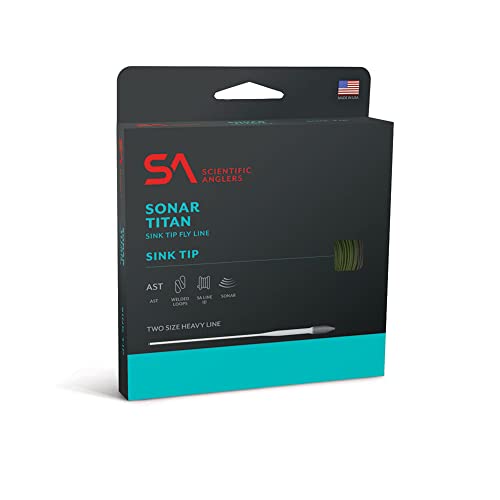
Scientific Anglers Sonar Titan Sink Tip, WF7F/S3
A floating body with a 15 foot Type 3 sinking tip, which sinks roughly 3 to 4 inches per second. That gets a streamer down without losing the ability to mend the floating running line behind it.
Skip it if: Dry fly and indicator fishing. A sinking tip drags an indicator under and makes a dry fly impossible to fish.
Specs are the manufacturer's published figures. Prices and stock change constantly, so confirm on the retailer page. We earn commissions from Backcountry and from qualifying Amazon purchases.
When do you need a sinking or sink tip line?
When the fish are deeper than a weighted fly on a floating line can reach, which in practice means stillwater and heavy winter runs. For most river trout fishing, split shot on the leader gets a nymph down more precisely and more cheaply than a sinking line does.
Sink rates are published in inches per second. A Type 3 sinks roughly 3 to 4 ips and a Type 6 roughly 6 to 7 ips, and the number in the name is the nominal rate. The arithmetic people expect is depth equals sink rate multiplied by sink time, and that is only true in still water. In current, the moving water lifts the line as it sinks, so the formula overstates depth, often badly. The sink rate and depth calculator accounts for that, and the sink rate chart lists the standard types side by side.
A sinking tip, like the Scientific Anglers Sonar Titan Sink Tip, WF7F/S3 with its 15 foot Type 3 front section, is the compromise most river anglers should reach for first. The floating body behind the tip can still be mended, which a full sinking line cannot, and mending is how you control depth on a swing. Full sinkers belong on lakes and reservoirs. The floating against sinking line comparison covers when each is worth the swap.
How do you keep a fly line performing?
A fly line is a plastic coating over a braided core, and it degrades in two ways. The coating loses plasticiser over time and gets stiffer, and it picks up dirt, algae and sunscreen that adds density and abrasion. The visible symptom is the same for both: the tip starts to sink, the line squeaks in the guides, and casts fall short.
Cleaning fixes most of it. Strip the line into a bucket of warm water with a drop of mild detergent, run it through a cloth, dry it, then dress it. The RIO Fly Line Cleaning Kit with Dressing at under $25 is cloth plus dressing and takes about five minutes. Anglers who do this two or three times a season report lines lasting twice as long as anglers who never do, and it recovers more casting distance than any tackle purchase at that price. The gear checklist lists the cleaning kit alongside everything else worth carrying.
Two habits that shorten line life fast: leaving the reel in a hot car, which cooks the coating, and standing on the line on gravel, which drives grit into it. Neither is dramatic, both are cumulative, and a quality line represents a real fraction of an outfit's price.
What goes between the line and the fly?
The leader, and it is not an accessory. A standard trout leader is 9 feet, tapered, at roughly 60 percent butt, 20 percent mid taper and 20 percent tippet. The butt section should be about two thirds the diameter of the fly line tip, because that is what allows the energy in the loop to pass smoothly from a thick line into a thin tippet instead of stalling and piling.
Get that wrong and no line fixes it. Tie a level piece of monofilament to a premium line and it will pile every cast. A Scientific Anglers Absolute Trout Leader, 9ft 5X in 9 foot 5X at under $25 for three is the default, and the leader roundup covers when to go longer or shorter. The leader and tippet calculator handles the formula if you would rather build your own.
At the other end, backing. Roughly 100 yards of 20 pound Dacron like the RIO Dacron Fly Line Backing, 20lb 100yd at under $25 on a 5/6 reel, which exists mainly to fill the spool so the fly line coils at a large diameter and holds fewer memory kinks. Trout will almost never take you into it.
How do you choose between two lines that look identical?
Compare four published figures and the choice usually resolves itself. Head length tells you how much line you can carry in the air before the running line reaches the guides; longer heads mend better, shorter heads load faster. Front taper length is the presentation dial; long fronts land softly, short fronts turn over weight. Total grain weight tells you whether the line runs true or heavy against the 140 grain standard. Coating and core tell you how it will behave in cold or heat, because a tropical core goes stiff and coily on a cold river.
If you want one recommendation without any of that arithmetic: put the RIO Premier Gold Fly Line, WF5F on a 9 foot 5 weight, add a 9 foot 5X leader, and fish. That combination is the reason a 5 weight is the most-sold rod in the world, and the line choosing guide walks through the same logic for every other weight. If your rod and reel are not sorted yet, the beginner setup build lists the whole system with a running total.
Two lines at the top of this category now have reviews of their own, and they are built on opposite principles: the RIO Elite Gold with a long head for distance, and the Scientific Anglers Amplitude MPX built half a size heavy to load a fast rod up close.
Frequently asked questions
What does WF5F mean on a fly line?
Three pieces of information. WF is weight forward, meaning the mass is concentrated in a head of roughly 35 to 45 feet with thin running line behind it. The 5 is the AFFTA line class, which is 140 grains in the first 30 feet plus or minus 6 grains. The F is floating. A WF5F line is therefore a weight forward floating line for a 5 weight rod, which is the default trout line.
How often should I replace my fly line?
Between roughly 100 and 250 days on the water for a quality line, which for most anglers is two to four seasons. The failure mode is not snapping, it is the coating losing plasticiser and picking up grit, so the line starts sinking at the tip, shoots poorly and feels sticky in the guides. Cleaning and dressing extends that life substantially and is the cheapest performance recovery available.
Do fly lines really weigh more than the standard says?
Many trout lines are built half a size to a full size over standard on purpose. A 5 weight standard is 140 grains in the first 30 feet, and it is common for a nominal WF5F to measure 150 grains or more. Manufacturers do this so fast rods load at the short distances people actually fish. It is a design choice, not a fault, but it means two lines both labelled WF5F can differ by 20 grains.
Should a trout line be weight forward or double taper?
Weight forward for almost everyone. The concentrated head loads the rod quickly and the thin running line shoots easily, which is what you want on a river with variable casting distances. Double taper is symmetrical, which lets you reverse it when one end wears and gives a softer presentation at short range, and it mends beautifully. It shoots badly beyond about 40 feet, so it suits small water and dry fly specialists.
What colour fly line should I use for trout?
Line colour matters far less than leader length, because the fish sees the leader and the fly, not the 30 feet of line behind them. Bright lines are easier for you to track and easier to mend accurately, which is a real advantage for a new angler. If you fish very flat, clear spring creeks with spooky fish, a muted line plus a 12 foot leader is a reasonable precaution rather than a requirement.
Can I use the same line for nymphs and dry flies?
Yes, and most trout anglers do. A general purpose weight forward floating line like the RIO Gold has enough mass forward to turn over a two-fly nymph rig with a split shot and a long enough front taper to present a size 18 dry without slapping. Where a dedicated line helps is at the extremes: a very long front taper for spring creek dries, or a short aggressive head for heavy indicator rigs.
How we choose: we compare published manufacturer specifications, line and leader standards, and verified owner reviews across retailers. We do not test gear in person, and every diameter, grain weight and breaking strength quoted here is the manufacturer's published figure unless we say otherwise, so check the spool label before you trust a number. Nothing here is professional instruction. Wading moving water is the real hazard in this sport: wear a snug wading belt, know the water temperature, and turn back rather than push through a crossing you are unsure of.