How to Choose a Fly Line Without Guessing
A fly line's weight class is set by the AFFTA standard as the mass in grains of its first 30 feet, excluding any level tip: a 5 weight is 140 grains with a tolerance of plus or minus 6. For general trout fishing, a weight forward floating line in the rod's marked weight is the correct default, and the line matters more to how a rod feels than the rod does.
The fly line is the most under-appreciated component in fly fishing and the one that changes how a rod feels more than anything else you can buy. A good line on a cheap rod outcasts a cheap line on a good rod, reliably, because the line is the mass the rod is designed to bend against. If you only upgrade one thing on a combo outfit, upgrade the line.
Choosing one means answering four questions in order: what weight, what taper, what density and what coating. This guide takes them in that order, using published manufacturer specifications and the AFFTA standard rather than any claimed in-person testing.
What does fly line weight actually mean?
A fly line's weight class is defined by the AFFTA standard as the mass, in grains, of the first 30 feet of the line, excluding any level tip. It is not the weight of the whole line, and it has nothing to do with breaking strength. A 5 weight line is one whose first 30 feet weighs 140 grains, with an allowed tolerance of plus or minus 6 grains.
| Line weight | Grains, first 30 ft | Tolerance | Typical use |
|---|---|---|---|
| 1 | 60 | ±6 | Tiny streams, panfish |
| 2 | 80 | ±6 | Small stream trout, panfish |
| 3 | 100 | ±6 | Small stream trout, euro nymphing |
| 4 | 120 | ±6 | Dry fly trout, light presentation |
| 5 | 140 | ±6 | General trout, the default |
| 6 | 160 | ±8 | Big trout, light streamers, wind |
| 7 | 185 | ±8 | Bass, small pike, heavy streamers |
| 8 | 210 | ±8 | Bonefish, redfish, pike |
| 9 | 240 | ±10 | Permit, salmon |
| 10 | 280 | ±10 | Tarpon, big salt |
| 11 | 330 | ±12 | Large tarpon, offshore |
| 12 | 380 | ±12 | Large tarpon, billfish |
Here is the important complication: a great many modern lines are deliberately built heavier than this standard. Manufacturers do it because fast action rods will not bend under a true standard line at the 20 to 30 feet where most trout are actually caught. A line marked 5 weight might genuinely measure 155 or 160 grains in its first 30 feet, which is a design decision rather than a defect. It also means "one size up" advice is often already applied for you, and doubling it makes the rod mushy.
Match the line to the number on the rod blank first, and only deviate if the rod feels dead at your normal fishing range. The line weight calculator works through the pairing, and rod weight by species covers what weight you should be fishing in the first place.
What taper should you choose?
Taper is how the line's diameter changes along its length, and it determines whether the line lands softly, carries a heavy fly, or shoots for distance. Two families dominate.
Weight forward concentrates most of the mass into a head of roughly 30 to 45 feet at the front, followed by thin running line. The head carries the energy, the running line shoots through the guides behind it, and the result casts further with less false casting. This is the correct default for almost everyone. A line like the RIO Premier Gold Fly Line, WF5F uses a long front taper so it still lands a dry fly softly, while a shorter, more aggressive head carries big flies better.
Double taper is thick through a long constant belly and tapers symmetrically at both ends. It presents very delicately, mends beautifully because the belly diameter is uniform, and can be reversed on the spool when one end wears out. It does not shoot well and it struggles with wind resistant flies. It is a genuine small stream advantage rather than a beginner trap. The weight forward versus double taper comparison goes further, and the fly line taper chart lists head lengths.
Floating, intermediate or sinking?
Density decides where in the water column the line sits, and it is the choice that most changes what you can fish.
| Density | Code | Sink rate | Where it belongs |
|---|---|---|---|
| Floating | F | 0 ips | Dries, indicator nymphing, most river fishing |
| Intermediate | I | 1 to 2 ips | Stillwater just under the surface, windy lakes |
| Sink tip Type 3 | F/S3 | 3 to 4 ips | Streamers in moderate current |
| Sink tip Type 6 | F/S6 | 6 to 7 ips | Deep runs, heavy flow |
| Full sink Type 3 | S3 | 3 to 4 ips | Lake trolling and counting down |
| Full sink Type 6 | S6 | 6 to 7 ips | Deep stillwater |
A floating line does 90 percent of trout fishing and should be your first and possibly only purchase. The second line most anglers buy is a sink tip such as the Scientific Anglers Sonar Titan Sink Tip, WF7F/S3 , which keeps a floating body for mending while a 15 foot tip takes the fly down. Full sinking lines belong on lakes.
How much does the coating matter?
More than the price difference suggests, and less than the marketing does. A fly line is a braided or monofilament core with a PVC or polyurethane coating over it, and the coating carries the slickness additives, the buoyancy microspheres and the durability. Premium lines add slickness treatments and, in some cases, a textured surface that reduces the contact area against the guides.
A textured line such as the Scientific Anglers Amplitude Smooth Infinity, WF5F shoots further with the same effort and holds dirt less, at the cost of an audible hiss through the guides that some anglers find irritating. A smooth, well made line like the Orvis Clearwater Fly Line, WF floating at a third of the price does the same job with slightly more friction and a shorter coating life. Neither will fix a casting fault, which is covered in fly casting basics.
Welded loops at both ends are worth looking for. A factory welded loop at the tip means leader changes take five seconds, and one at the back end means the backing connection is loop to loop rather than a knot you have to tie in fine dacron.
Does core material matter?
Yes, mainly through stiffness and temperature. Cold water trout lines use a supple core so they stay limp and coil free in cold conditions. Tropical lines use a stiff, hard core with a harder coating so they do not turn to spaghetti in heat. Swap them and both fail: a trout line goes tacky and refuses to shoot in the tropics, and a tropical line such as the RIO Elite Bonefish Fly Line, 8wt behaves like coiled wire in a cold river.
Core also sets stretch. Low stretch cores transmit takes better and set hooks harder at distance, which matters in salt water and on long nymph drifts. High stretch nylon cores are more forgiving on light tippet, which is why a low stretch line paired with 6X on a short line is a reliable way to break fish off.
Which fly line should you actually buy?
For a general purpose 5 weight trout rod, buy a weight forward floating line in the rod's marked weight, from a manufacturer that publishes its head length and grain window. That is it. Spend between roughly 50 and 100 dollars, and expect the difference across that range to show up in coating life and shooting distance rather than in fish caught.
| If you mostly fish | Buy this | Rough price |
|---|---|---|
| Rivers, dries and nymphs, one line | WF floating, long front taper | $49 to $100 |
| Small streams inside 40 ft | Double taper floating | $49 to $80 |
| A fast rod at close range | WF floating built half size heavy | Under $100 |
| Streamers in current | Floating body with a Type 3 sink tip | Under $250 |
| Warm salt flats | Tropical core WF floating | Under $250 |
Our best fly line for trout roundup carries the tier by tier picks. If you are still assembling the rest of the rig, work through how to set up a fly rod first so the line goes on in the right order and the right way round.
When should you replace a fly line?
A regularly fished line lasts roughly two to five seasons. Replace it when you see fine cracking in the coating, when the tip sinks despite a proper clean and dressing, when the surface has gone dull and grabby, or when a permanent set will not stretch out. Cracks are the definitive signal, because a cracked coating absorbs water and no amount of cleaning brings it back.
Before you replace it, clean it. Grit embedded in the coating is the main cause of both sinking tips and lost distance, and a cleaning kit such as the RIO Fly Line Cleaning Kit with Dressing costs a fraction of a new line. Cleaning every few outings roughly doubles line life, which makes it the highest return maintenance job in the sport. The full routine is in the fly line roundup, and line replacement is priced into the season budget in the restock checklist.
Fly lines worth buying, by what you need from them

Orvis Clearwater Fly Line, WF floating
A straightforward weight forward floating line with welded loops at both ends, which is the single feature that saves a beginner the most trouble. Nothing clever, nothing to go wrong.
Best for: A first replacement line, or upgrading the coil that came with a cheap combo.
Scientific Anglers Frequency Boost Fly Line, WF5F
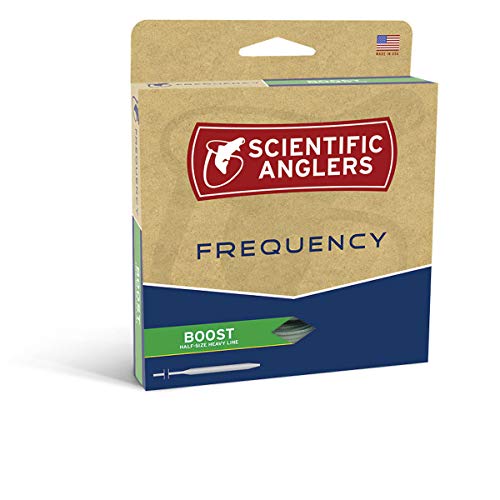
Built a half size heavy on purpose so it loads a fast rod at short range. If your rod feels dead inside 30 feet, this is a far cheaper fix than a new rod.
Best for: Fast action rods and anglers who fish close.
Skip it if: A rod that already feels well loaded. Adding weight to a happy rod makes it mushy.

RIO Premier Gold Fly Line, WF5F
A long front taper for delicate dry fly presentation with enough head mass to carry a nymph rig, which is the compromise most trout anglers actually want from one line.
Best for: The one line answer on a general purpose 5 weight.

Scientific Anglers Amplitude Smooth Infinity, WF5F
A textured coating with an added slickness treatment, which measurably reduces guide friction and helps the line float higher and stay cleaner for longer.
Best for: Anglers who fish enough that coating life and shooting distance are real considerations.
Skip it if: Beginners. The textured surface makes an audible hiss through the guides that some anglers dislike, and it will not fix a casting fault.
Specs are the manufacturer's published figures. Prices and stock change constantly, so confirm on the retailer page. We earn commissions from Backcountry and from qualifying Amazon purchases.
One closing sanity check. If a rod feels wrong, test the line before you blame the blank. A line one size off, a line built far heavier than its label, or a line so dirty it no longer floats accounts for the large majority of "this rod does not cast" complaints, and all three are cheaper to fix than a rod is to replace.
Frequently asked questions
What do the letters on a fly line box mean?
They read as taper, weight, density. WF5F is weight forward, 5 weight, floating. DT4F is double taper, 4 weight, floating. WF7F/S3 is a weight forward 7 weight with a floating body and a Type 3 sinking tip. I stands for intermediate and S for sinking, usually with a type number giving the sink rate in inches per second.
Should I buy a line one size heavier than my rod?
Only if the rod feels dead at the range you actually fish. Fast rods often will not bend under a true standard line at 20 or 25 feet, and a half size or full size heavy line fixes that. If the rod already loads well, an over-weighted line makes it feel mushy and kills presentation. Many lines are already built heavy, so check before adding more.
How long does a fly line last?
Two to five seasons for a regularly fished line, depending on grit, sunlight and cleaning habits. Replace it when the coating shows fine cracks, when the tip section sinks despite cleaning and dressing, or when it develops a permanent set that will not stretch out. Cleaning a line every few outings roughly doubles its life, which makes it the cheapest performance upgrade available.
Is a double taper line worth buying?
On small streams and for anglers fishing mostly inside 40 feet, yes. A double taper rolls over delicately, mends beautifully because of the constant diameter belly, and can be reversed when one end wears out, which effectively gives two lines. It gives up distance and struggles to carry heavy or wind resistant flies, so it is a specialist rather than a default.
What sink rate should a sinking line have?
Type 3, at roughly 3 to 4 inches per second, is the general purpose sinking density for lakes and moderate rivers. Type 6, at roughly 6 to 7 inches per second, is for deep water and heavy current. Remember that published rates are still water figures, so in moving water the depth reached in a given count is always less than the arithmetic suggests.
Do I need a special line for cold or tropical water?
Yes, if the temperature difference is large. A tropical line uses a stiffer core and harder coating that stays manageable in heat, and it turns to wire in cold water. A cold water trout line goes limp and tacky in tropical heat and will not shoot. Buying a saltwater outfit line for a bonefish trip is not marketing, it is a genuine material difference.
How we choose: we compare published manufacturer specifications, line and leader standards, and verified owner reviews across retailers. We do not test gear in person, and every diameter, grain weight and breaking strength quoted here is the manufacturer's published figure unless we say otherwise, so check the spool label before you trust a number. Nothing here is professional instruction. Wading moving water is the real hazard in this sport: wear a snug wading belt, know the water temperature, and turn back rather than push through a crossing you are unsure of.