Fly Casting Basics: The Stroke, the Pause and the Faults
A fly cast works by loading the rod with the mass of the line, and the whole stroke is an acceleration to an abrupt stop in both directions with a pause between them long enough for the line to straighten. Thirty feet of accurate casting covers the large majority of trout fishing, so accuracy inside 30 feet matters far more than distance.
A fly cast is an acceleration to an abrupt stop, made twice, with a pause in between. That is the whole mechanic. Everything that goes wrong with a beginner's cast goes wrong because one of those three elements is missing: the acceleration is uneven, the stop is soft, or the pause is rushed. Nothing about it requires strength, and adding effort to a broken stroke makes it worse rather than better.
This guide explains the physics in plain terms, walks the stroke, then names the four faults that account for nearly every problem people bring to a casting lesson. It is researched from published instruction principles and rod and line specifications, not from claimed personal coaching.
How does a fly cast actually work?
In spin fishing, the lure has mass and the line follows it. In fly fishing the fly weighs almost nothing, so the line itself is the casting weight. When you accelerate the rod, the mass of the line resists and bends the blank. That bend is stored energy, called the load. When you stop the rod abruptly, the stored energy releases, the tip flips forward, and the line unrolls in a loop travelling away from you.
This is why the line weight must match the rod. The AFFTA standard sets a line's weight class by the mass in grains of its first 30 feet: a 5 weight is 140 grains, plus or minus 6. A rod built for 140 grains loaded with 100 grains barely bends, and the cast feels dead. Loaded with 200 grains it bends too deeply and never recovers, and the cast feels mushy. Confirm the pairing with the line weight calculator before blaming your stroke.
What is the correct casting stroke?
Start with about 20 feet of line on the water in front of you, rod tip low and pointing down the line so there is no slack. Slack is the enemy of every cast: energy applied to slack line does nothing except make noise.
- Lift. Raise the rod smoothly to peel the line off the water. This is a lift, not a yank. Peeling 20 feet of line off the surface takes a moment and rushing it tears the line free with a splash.
- Accelerate back. Speed up continuously through a short arc, roughly from the rod pointing at the water to the rod just past vertical, and stop the rod hard. The stop is what forms the loop. A soft stop makes a wide, sloppy loop that will not cut wind.
- Pause. Wait for the line to straighten behind you. With 20 feet out this is brief; with 50 feet out it is noticeably longer. This is the step people get wrong.
- Accelerate forward. Same motion in reverse, accelerating smoothly to an abrupt stop with the rod tip at roughly eye level or slightly above.
- Follow through and drop. After the stop, lower the rod tip to follow the line down so it lands straight rather than being pulled back toward you.
Two habits make this dramatically easier. Keep the wrist mostly locked: the stroke comes from the forearm, and a floppy wrist opens the arc and drops the tip. And turn your head and watch the backcast for the first few sessions. Timing you can see becomes timing you can feel, and there is no other reliable way to learn it.
How long should the pause be?
Exactly as long as the line takes to straighten, which changes with how much line is out. There is no fixed count, but the table below gives usable starting points for a 5 weight, and the important lesson is that the pause is not constant.
| Line out | Rough pause | False casts needed | What it feels like |
|---|---|---|---|
| 20 ft | 0.5 s | 0 to 1 | Quick and crisp, almost no wait |
| 30 ft | 0.8 s | 1 | A distinct beat between strokes |
| 40 ft | 1.1 s | 1 to 2 | Long enough to feel uncomfortable at first |
| 50 ft | 1.4 s | 2 | You feel the line tug the rod tip when it straightens |
| 60 ft | 1.7 s | 2 to 3 | Beyond most trout fishing needs |
Treat these as approximations, since line taper, rod action and wind all move them. A double taper line straightens differently from an aggressive weight forward head, which is one of several reasons to read weight forward versus double taper before buying.
What are the four faults that ruin most casts?
Fault one: rushing the pause. The forward stroke begins before the line has straightened, so it pulls against slack, the loop collapses and the line piles. This is the single most common problem and the fix is uncomfortable patience.
Fault two: a wide arc. Letting the rod travel through a huge sweep, usually from a breaking wrist, sends the tip through a curved path. A curved tip path makes a wide, open loop with no line speed. Shorten the arc and the loop tightens immediately.
Fault three: power applied too early. Punching hard at the start of the stroke and easing off at the end dips the tip and throws a tailing loop, which is what puts wind knots in your tippet. Casting should feel like it builds: slow to fast, then stop.
Fault four: creep. Drifting the rod forward during the pause shortens the stroke without you noticing, so the next cast has less arc to work with and dies. Hold the stop position until the line is straight, then move.
If you cannot tell which of the four you are committing, cast on grass with a bright yarn fly and film yourself from the side. Every one of these faults is obvious on video and nearly invisible from behind the rod.
When do you use a roll cast?
Whenever there is no room behind you, which on small streams is most of the time. A roll cast uses the friction of line on water to load the rod instead of a backcast.
Draw the rod back slowly until the line slides toward you and a D shaped belly of line hangs from the rod tip down behind your shoulder. Pause briefly so the D is stable, then accelerate forward and stop hard as though you were driving a nail into a wall in front of you. The loop rolls out along the water. Two things make it fail: starting with the line already straight, which gives nothing to load against, and lifting rather than driving forward.
The roll cast is also the correct way to lift a sunk nymph rig. Roll the flies to the surface first, then make your backcast from there, rather than trying to rip two weighted flies and a split shot straight out of three feet of water. That habit alone prevents a lot of tangles on the rigs described in how to rig a nymph setup.
What about wind, and when do you need a haul?
Wind is a line speed problem, and line speed comes from a tighter loop, not from a bigger effort. Into a headwind, aim the forward cast slightly down toward the water and drive to a firmer stop. With a crosswind coming from your casting shoulder, cast with the rod tilted across your body so the fly passes downwind of your head. That last point is safety rather than technique: a size 14 hook driven by a gust past your face is the reason polarized eye protection belongs on this list.
A single haul, a short sharp pull on the line with the free hand during the stroke, adds line speed for very little effort and is the highest value addition to a basic cast. The double haul adds one on each stroke and is what generates real distance in salt water. Neither is needed to fish trout well, and both are best added after the basic stroke is consistent.
How does rod choice affect learning to cast?
Considerably, and not in the direction people assume. Fast, stiff rods are marketed as premium, but they hide the load, which means a beginner gets no feedback about whether the rod bent at all. A medium-fast rod like the Redington Path Fly Rod, 9ft 5wt 4pc or a genuinely moderate one such as the Redington Classic Trout Fly Rod, 8'6" 5wt 4pc bends visibly at 25 feet, so the stroke teaches itself. Glass rods like the Echo River Glass Fly Rod, 8'0" 5wt take this further and are a pleasure inside 30 feet.
| Action | Where it bends | Best range | Good for a learner? |
|---|---|---|---|
| Slow, glass | Into the grip | 10 to 35 ft | Yes, on small water |
| Moderate | Mid blank | 15 to 45 ft | Yes, the best teacher |
| Medium-fast | Upper third | 20 to 55 ft | Yes, the default choice |
| Fast | Tip only | 30 to 70 ft | No, it hides your mistakes |
Length matters too. Nine feet is the default because it balances line control, mending reach and casting stroke, and the rod length calculator covers when to step away from it. If you are still deciding on line weight, the 5 weight versus 6 weight comparison is the relevant one for trout. A matched outfit such as the Redington Crosswater Fly Fishing Outfit, 9ft 5wt 4pc removes the pairing question entirely.
How should you practise?
On grass, with yarn instead of a hook, in twenty minute blocks. Put a paper plate at 20 feet and another at 30. Cast at the near plate until you can hit it with one backcast, every time, then move to the far one. Distance work comes after accuracy work, not before, because a long cast you cannot place is worth nothing on a river.
Practise the roll cast the same way, and practise casting with your other hand for a few minutes each session. A serviceable off hand cast is worth more on a real river than an extra ten feet of distance, because it lets you fish the awkward bank without turning around. When the stroke is reliable, spend your attention on drift and water reading instead, which is where the fish actually are: see how to fish dry flies.
Rods and lines that make casting easier to learn

Redington Path Fly Rod, 9ft 5wt 4pc
A medium-fast 9 foot 5 weight that loads visibly at short range, which is exactly what a new caster needs to feel. A stiff rod hides the load and hides the mistake with it.
Best for: Learning a casting stroke without fighting the blank.

Redington Classic Trout Fly Rod, 8'6" 5wt 4pc
A moderate action 8'6" 5 weight that bends deep into the blank. Slower rods force correct timing because a rushed stroke collapses the loop immediately and you feel it.
Best for: Anglers whose casting has plateaued and who want the rod to teach them.

Echo River Glass Fly Rod, 8'0" 5wt
Fibreglass loads under almost no line at all, which makes short casts on small water genuinely enjoyable and forces a patient stroke.
Best for: Small stream fishing inside 30 feet.
Skip it if: Windy days, long casts and heavy nymph rigs. Glass gives up distance and wind cutting for feel.
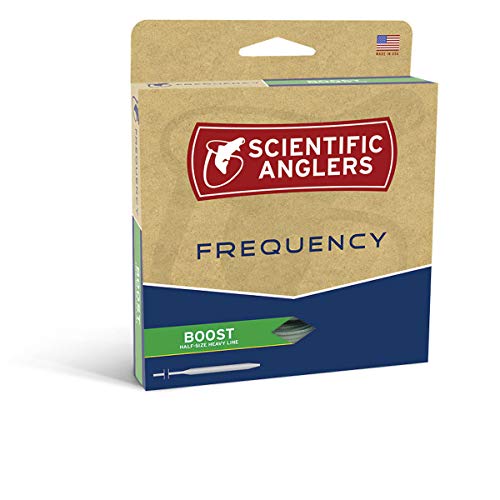
Scientific Anglers Frequency Boost Fly Line, WF5F
Built a half size heavy on purpose, so it loads a fast rod at close range where most trout are actually caught. If your casting feels dead inside 30 feet, this is usually the fix rather than a new rod.
Best for: Fast action rods that will not load at short distance.
Specs are the manufacturer's published figures. Prices and stock change constantly, so confirm on the retailer page. We earn commissions from Backcountry and from qualifying Amazon purchases.
One last note on realism. Casting is the visible part of fly fishing and the least important part of catching fish. A competent thirty foot cast, a drag free drift and a fly in the right place beats a beautiful sixty foot cast into water that holds nothing. Learn the stroke well enough that it stops occupying your attention, then stop thinking about it.
Frequently asked questions
Why does my fly line pile up instead of straightening?
Almost always a pause that is too short. The line has to fully straighten behind you before the forward stroke begins, and the required pause gets longer as more line is out. If the loop has not formed and unrolled, the forward cast pulls against slack and dumps everything in a heap. Turn your head and watch the backcast until the timing becomes automatic.
What is a tailing loop and how do I fix it?
A tailing loop is when the fly leg of the line crosses below the rod leg, producing wind knots and tangles. It comes from applying power too early and unevenly in the stroke, which drops the rod tip below a straight path. The fix is to accelerate smoothly to a hard stop rather than punching from the start, and to widen the casting arc slightly as more line goes out.
How far do I actually need to cast?
Thirty feet covers the large majority of trout fishing on rivers, and plenty of fish are caught inside twenty. Distance is the most overvalued skill in fly fishing, because a long cast produces a poor drift, a slow hookset and a spooked fish that you walked past to reach. Learn to cast thirty feet accurately with one backcast before working on anything longer.
What is a roll cast for?
Casting when there is no room behind you, which describes most small streams and any bank with trees. It uses the water tension on the line to load the rod rather than a backcast. Slide the line toward you until a D shaped loop hangs behind the rod, then drive forward and stop. It is also the fastest way to lift a sunk nymph rig before recasting.
Should I false cast to dry the fly?
Sparingly. Two or three false casts dry a dry fly and let you measure distance, and every one after that is an opportunity to spook a fish, land the line in a tree or put a wind knot in the tippet. Water shed and floatant do more for a soggy fly than repeated air time. Fewer false casts is a reliable marker of an experienced angler.
Can I practise fly casting on grass?
Yes, and it is the fastest way to improve. Use a piece of bright yarn instead of a hook so nothing snags or hooks you, and put a paper plate out at twenty and thirty feet as a target. Grass shows the loop clearly and removes every distraction of fishing. Twenty minutes on a lawn beats a full day of fishing for pure casting progress.
How we choose: we compare published manufacturer specifications, line and leader standards, and verified owner reviews across retailers. We do not test gear in person, and every diameter, grain weight and breaking strength quoted here is the manufacturer's published figure unless we say otherwise, so check the spool label before you trust a number. Nothing here is professional instruction. Wading moving water is the real hazard in this sport: wear a snug wading belt, know the water temperature, and turn back rather than push through a crossing you are unsure of.