5 Weight vs 6 Weight Fly Rod
Buy the 5 weight if you are buying one trout rod. Under the AFFTA standard a 5 weight line carries 140 grains in the first 30 feet and a 6 weight carries 160, roughly 14 percent more mass. That extra mass is what beats wind, big water and weighted streamers, and it is also what costs you delicacy on flat water and tippet protection on the strike.
This is the most asked question in trout fishing and it has a real answer. A 9 foot 5 weight is the single-rod answer for trout. A 6 weight is the right rod for wind, big water, light streamers and smallmouth bass. Everything below is the reasoning, and the reasoning starts with the fact that a fly rod's weight rating is not a description of the rod at all. It is a description of the line the rod is designed to carry.
Here is the definition that makes the rest of the page make sense. A fly line's weight class is set by the AFFTA standard, which measures the mass in grains of the first 30 feet of line, excluding any level tip. A 5 weight line is 140 grains with a tolerance of plus or minus 6. A 6 weight is 160 grains with a tolerance of plus or minus 8. A rod stamped 5 weight is a blank the maker believes bends correctly under 140 grains of moving line. That is the whole of the rating. It says nothing directly about the fish, the fly or the river.
The Redington Path at under $100 is the cheapest place to buy that 5 weight answer, and it is worth saying plainly that the price of the blank is not what decides this question. The line class does, and so does the line you hang on it.
What is the actual difference between 140 grains and 160 grains?
It is 20 grains, which is about 14.3 percent more mass in the working part of the line. In human terms that is roughly the difference between a heavy paperclip and nothing, and in casting terms it is enough to change what the system can do, because a fly cast is a mass being accelerated and then stopped. More mass in the same stroke stores more energy, carries further against air resistance, and hits a headwind with more authority. It also lands harder, and that is the trade in one sentence.
The tolerances matter more than most anglers realise. A legal 5 weight line can measure anywhere from 134 to 146 grains. A legal 6 weight can measure from 152 to 168 grains. That leaves a gap of only 6 grains between the heaviest legal 5 weight and the lightest legal 6 weight. In other words, a heavy 5 weight and a light 6 weight are almost the same line, and two lines both labelled 5 weight can differ by 12 grains, which is more than half of the whole step between classes.
| Specification | 5 weight | 6 weight | What it means on the water |
|---|---|---|---|
| AFFTA mass, first 30 ft | 140 gr | 160 gr | The 6 carries about 14.3 percent more mass in the same stroke |
| Published tolerance | ±6 gr | ±8 gr | Only 6 grains separate the legal bands |
| Legal mass range | 134 to 146 | 152 to 168 | Two lines of the same class can differ noticeably |
| Typical tippet range | 4X to 6X | 3X to 5X | 0.007 to 0.005 in against 0.008 to 0.006 in |
| Comfortable dry fly range | 14 to 22 | 10 to 18 | The 5 lands small flies more softly on flat water |
| Comfortable streamer size | 10 to 6 | 8 to 2 | Fly bulk, not fish size, is the real limit |
| Usable headwind | up to 10 mph | up to 18 mph | Approximate, and stroke quality moves both numbers |
| Typical indicator rig | 1 to 2 flies | 2 flies plus shot | The 6 turns over a loaded rig without collapsing |
One more number is worth having in your head before you shop. Many modern lines are built deliberately over standard so that fast rods load at the short distances people actually fish. A nominal 5 weight built half a size heavy measures around 150 grains, which is outside the legal 5 weight band entirely, and a full size heavy 5 weight measures 160 grains, which is a 6 weight in everything but the label. That is not a scandal, it is a design decision, but it means a great deal of the difference people attribute to rods is really the line. Before you buy a second rod, put the numbers through the line weight calculator and check what you are actually casting.
Which rod handles wind better, and by how much?
The 6 weight, clearly, and the mechanism is worth understanding because it explains most of the other differences too. Wind resistance acts on the surface of the line and the fly. Momentum, which is mass multiplied by velocity, is what pushes through it. Adding 20 grains to the head adds momentum without adding much surface area, so the same casting stroke drives the line further into a headwind before it stalls.
In practical terms, an average caster with a 5 weight starts fighting a steady breeze somewhere around 10 miles per hour, and starts losing the ability to straighten a 9 foot leader at around 15. The same caster with a 6 weight has roughly one wind category of headroom: awkward becomes workable, and impossible becomes awkward. That is not a small thing on a reservoir bank, on a western river in the afternoon, or on any flat where the wind builds through the day.
Line design changes this as much as line class does. A shorter, more aggressively front-loaded head concentrates mass and punches better than a long delicate taper of the same class, which is why a good wind line in 5 weight can outperform a delicate presentation line in 6 weight. The specification to compare is head length, because that is what actually decides how a line behaves in wind, and it varies far more between families than the weight class on the box suggests.
What can a 6 weight throw that a 5 weight cannot?
Bulk, not weight. This is the single most misunderstood part of the comparison. A 5 weight will land a very large trout, and a 6 weight is not needed to fight fish that a 5 weight can hook. What a 5 weight struggles with is casting a fly whose air resistance and mass exceed what 140 grains can drag through the air and still turn over.
The practical boundary sits around a size 8 weighted streamer, a heavily dressed hopper, or a two fly nymph rig carrying a pair of split shot and an indicator. Below that, a 5 weight is comfortable. Above it, the loop opens, the leader stops straightening, and casts start landing in a heap regardless of how good the stroke is. The 6 weight moves that boundary out to roughly a size 2 to 4 streamer and a fully loaded indicator rig, which is exactly the range that big western rivers and smallmouth rivers ask for.
Smallmouth deserve a specific mention because they sit right on the line. A smallmouth eats a fly that is usually too big for a 5 weight to cast happily all day, and the fish itself is strong, dogged and often caught in current. A 6 weight is the honest smallmouth rod for anyone who does not want to own a 7 weight, and a size 4 or 6 popper is the fly that settles it. The rod weight by species chart extends the same logic to everything else that swims.
Which rod protects light tippet better?
The 5 weight, and this is the argument that keeps it on top for trout. When a fish takes and you set, the shock has to be absorbed by something. A softer, lighter blank bends further and sooner, which spreads the load over time and reduces the peak force reaching the knot. A stiffer, heavier blank resists more, and more of that peak lands on 0.005 inches of nylon.
That matters because tippet diameter is fixed by what the fish will accept, not by what your rod would prefer. On a flat spring creek with a size 20 dry fly, the rule of four gives you 5X as a starting point and experience usually pushes you to 6X, which is 0.005 inches. On a 6 weight, that combination breaks off more often, and there is nothing you can do about it except slow your hands down. The rule of four, which divides hook size by four to get a starting tippet X, will hand you the same fine diameters on either rod, and only one of the two rods is kind to them.
Presentation cuts the same way. A 5 weight line lands with less mass and less disturbance, and on still, clear water that disturbance is the whole game. Fish in a fast riffle do not care. Fish in a flat pool care a great deal, and a 6 weight makes you work harder to get an acceptable delivery at close range.
What is the verdict, and who is the 6 weight actually for?
Verdict: buy the 5 weight first, in a 9 foot 4 piece medium-fast blank. It is the widest useful compromise in the whole line standard and it is the only rod that does not need a second rod to be complete. The Redington Path Fly Rod, 9ft 5wt 4pc is the cheapest version worth owning and the Redington Classic Trout Fly Rod, 8'6" 5wt 4pc is the version to buy if most of your water is under 40 feet wide.
Now the honest half, because a comparison that only defends the winner is not worth reading. Buy the 6 weight first if any of the following describes your actual fishing, not the fishing you imagine.
- You fish wind more days than not. Reservoir banks, high plains rivers, coastal streams and anywhere the afternoon breeze is reliable. The extra 20 grains buy you a category of headroom you will use constantly.
- You fish big water. Wide rivers where 50 and 60 foot casts are normal rather than showing off, and where mending a long line across conflicting currents is the daily task.
- You fish streamers as your first choice. Weighted flies, sink tips and the willingness to cover water rather than fish a rise. A 6 weight makes that day pleasant and a 5 weight makes it a fight with your own tackle.
- You fish smallmouth bass, or trout and smallmouth in the same season. One 6 weight covers both honestly. Two rods cover them better, but a 6 weight is the single-rod compromise for that pairing in the way a 5 weight is for trout alone.
- You fish an indicator rig with weight most of the time. Two flies, split shot and a wool indicator is a heavy, wind-resistant assembly, and the 6 weight turns it over cleanly instead of lobbing it, which also makes the rig safer to have travelling past your head.
And the reverse, because it is just as useful: skip the 6 weight if you fish small to medium trout streams, if your flies are mostly size 14 and smaller, if you fish 5X and 6X, or if you are buying your first rod. A 6 weight as a first rod is not a disaster, it is just a rod that will make dry fly fishing slightly worse for you for a season while solving problems you do not yet have.
How do the two compare across a season of real fishing?
| Situation | Winner | Margin | Why |
|---|---|---|---|
| Size 18 dry on a flat pool | 5 weight | Clear | Softer delivery, less disturbance, kinder to 6X |
| Two nymphs and an indicator | 6 weight | Clear | Turns over a loaded rig instead of piling it |
| Small stream, casts under 30 ft | 5 weight | Large | Loads at short range where the 6 feels dead |
| Steady 15 mph headwind | 6 weight | Large | More momentum through the same air |
| Size 4 conehead streamer | 6 weight | Decisive | The 5 cannot carry that bulk at range |
| Size 12 hopper at 40 ft | Draw | None | Both do this comfortably |
| Playing a 20 inch trout | Draw | None | Tippet and drag decide this, not line class |
| Smallmouth on a popper | 6 weight | Clear | Air resistance of the fly, not the fish |
| Bluegill on a small popper | 5 weight | Moderate | Lighter delivery, more fun on the fish |
| Stillwater from a bank, long casts | 6 weight | Moderate | Carries more line in the air with less effort |
Read that table honestly and the pattern is plain: the 5 weight wins the delicate, close and small situations, the 6 weight wins the heavy, windy and far situations, and a good deal of the middle is a draw. Most trout anglers spend most of their season in the delicate to middle band, which is why the 5 weight is the default and not a compromise anyone should apologise for.
Does the line matter more than the rod here?
Usually, yes, and this is the cheapest realisation in fly fishing. A rod is a spring. The line is the mass that loads it. Changing the line changes how the rod feels far more than most anglers expect, and it costs a fraction of a second rod.
Concretely: if your 5 weight feels dead at 25 feet, the problem is almost never the blank. It is that a true-to-standard line does not put enough mass outside the tip at that distance to bend it. A half size heavy line at around 150 grains fixes it for the price of a line rather than the price of a rod. The Scientific Anglers Frequency Boost Fly Line, WF5F is built exactly that way, half a size heavy on purpose. If your rod feels sloppy and mushy at 45 feet, the reverse is true, and a line built closer to standard like the RIO Premier Gold Fly Line, WF5F will tighten it up.
So before you buy a 6 weight to solve a wind problem, try a heavier or more aggressively tapered line on the 5 weight you already own. A Orvis Clearwater Fly Line, WF floating at under $50 is a cheap experiment, and the trout fly line roundup covers which families push wind and which present softly. Half the anglers who think they need a heavier rod need a different line, and the other half genuinely need the 6 weight.
What length and action go with each weight?
Nine feet is the default for both, and for the same reason: it balances reach for mending, tip height to keep line off conflicting currents, and enough leverage to cast without fatigue. Under 8 feet is a specialist choice for brushy small streams where a backcast is impossible, and 10 feet and over is a nymphing and stillwater choice. Length is the specification people overthink most, and nine feet is the answer often enough that it should be your default in either weight.
Action interacts with weight in a way worth stating. A slow or moderate 6 weight behaves a lot like a fast 5 weight in the hand, because the extra mass compensates for the softer blank. That is why a moderate 6 weight is a genuinely lovely all-round rod for someone who fishes bigger water but still wants feel, and why a fast 5 weight is the choice for someone who fishes trout water in wind and does not want a second rod. The two configurations meet in the middle.
If you are buying the whole system rather than a blank, the Redington Crosswater Fly Fishing Outfit, 9ft 5wt 4pc arrives with the line already matched to the rod, and the beginner setup build lists everything else that stands between a box and a fishable outfit. Matching is where first seasons go wrong far more often than line class choice is.
Rods and outfits for each answer

Redington Path Fly Rod, 9ft 5wt 4pc
The cheapest honest version of the single-rod answer: 9 feet, 5 weight, 4 pieces, medium-fast. It carries a dry fly, a two nymph rig and a small streamer without being so heavy that 5X tippet pops on the strike.
Best for: A first trout rod, and the rod that stays useful once you own three others.

Redington Classic Trout Fly Rod, 8'6" 5wt 4pc
Half a foot shorter and noticeably slower, which loads with less line outside the tip and protects fine tippet on the hookset. This is the argument for going down in weight rather than up.
Best for: Dry fly water, small to medium streams, and anyone who fishes 5X and 6X most of the season.
Skip it if: Reservoir banks in a steady wind, where a slow blank runs out of authority long before your arm does.

Redington Vice Fly Rod, 9ft 5wt 4pc
A fast blank with reserve power in the butt. This is the action that makes a 6 weight worth owning, because line speed is what actually beats wind, and a fast 6 weight beats a fast 5 weight at it by a clear margin.
Best for: Wind, weighted rigs, big water and anyone who has already learned a casting stroke.
Skip it if: A first rod. A fast action punishes a rushed stroke by collapsing the loop, and you will blame yourself for a mismatch that belongs to the rod.
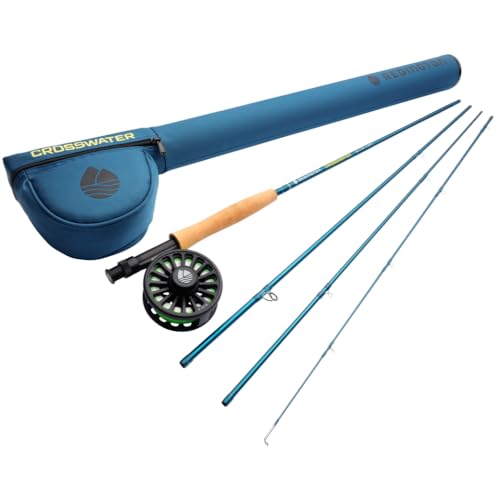
Redington Crosswater Fly Fishing Outfit, 9ft 5wt 4pc
Rod, reel, line, backing and leader already matched, which removes the mistake that ruins more first seasons than action choice ever has: hanging a line of the wrong mass on a blank.
Best for: Anyone buying a 5 weight for the first time who does not want to research line tapers yet.
Specs are the manufacturer's published figures. Prices and stock change constantly, so confirm on the retailer page. We earn commissions from Backcountry and from qualifying Amazon purchases.
One last framing that settles the question for most people. You are not choosing between two rods forever. You are choosing which one to buy first. Buy the 5 weight first and the 6 weight second, unless wind, streamer size or smallmouth have already told you plainly that you have the problem the 6 weight solves. The 5 weight roundup has the current picks, and the floating against sinking line comparison is the next decision either rod will hand you.
If wind is what pushed you toward the 6 weight, it is worth reading the Redington Vice review first, because a fast 5 weight solves part of the same problem with less loss of delicacy. If you have decided the 6 is right, the Orvis Encounter outfit review covers a complete 9 foot 6 weight, and if you have gone the other way, the Redington Classic Trout review is the soft 5 weight at the opposite end of the same argument.
Frequently asked questions
Is a 6 weight too heavy for trout?
No. A 6 weight carries 160 grains in the first 30 feet against 140 for a 5 weight, which is roughly 14 percent more mass. That extra mass turns over a weighted nymph rig or a small streamer in wind, and plenty of western rivers are fished with 6 weights all season. The real cost is delicacy: a 6 weight lands a size 20 dry more heavily on flat water, and it protects 6X tippet less well on a hard strike.
Can I put a 6 weight line on a 5 weight rod?
You can, and many people effectively already do. Modern lines often run half a size to a full size heavy, so a nominal 5 weight line can measure closer to 150 grains than 140. Going a full size up to 160 grains loads a fast blank beautifully at short range and makes it feel sluggish at distance. Try it before you buy a second rod, because a heavier line is a cheaper experiment than a new blank.
Which is better for streamers, a 5 weight or a 6 weight?
A 6 weight, once the fly gets bigger than about a size 8 or carries a conehead. The limit is not the fish, it is the fly. Air resistance and mass of a weighted streamer defeat a 5 weight line at range, so loops collapse and the leader piles. A 6 weight carries the same fly with less effort and fewer tailing loops. For unweighted soft hackles and small buggers, a 5 weight is still fine.
Does a 6 weight cast further than a 5 weight?
Slightly, and mostly for the wrong reason. More mass in the first 30 feet means more energy stored in the same casting stroke, so a 6 weight carries a longer line with less effort and holds a tighter loop into a headwind. Distance in fly casting is far more a function of loop shape and line speed than of line class, so a good caster with a 5 weight will beat a poor caster with a 6 weight every time.
If I own one trout rod, which should it be?
A 9 foot 5 weight. It covers small stream trout to river trout, handles dries, nymph rigs and small streamers, doubles for bass bugs on a warm pond, and it is the only line class every fly shop stocks lines and leaders for in depth. Buy the 6 weight second, when a specific problem, usually wind or streamer size, has told you plainly that the 5 weight is the limit.
What tippet should I fish on each rod?
A 5 weight commonly fishes 4X to 6X, which is 0.007 down to 0.005 inches of diameter. A 6 weight commonly fishes 3X to 5X, which is 0.008 down to 0.006 inches. The heavier rod is not obliged to fish heavier tippet, but a stiffer blank transmits more shock to the knot, so most anglers step up one X size when they step up a line class to keep break-offs at the same rate.
How we choose: we compare published manufacturer specifications, line and leader standards, and verified owner reviews across retailers. We do not test gear in person, and every diameter, grain weight and breaking strength quoted here is the manufacturer's published figure unless we say otherwise, so check the spool label before you trust a number. Nothing here is professional instruction. Wading moving water is the real hazard in this sport: wear a snug wading belt, know the water temperature, and turn back rather than push through a crossing you are unsure of.