How to Fish Dry Flies
Dry fly fishing is a drag problem before it is a fly problem. A straight cast into mixed current gives roughly 2 feet of drag free drift, while a reach cast plus mends gives roughly 20 feet, a gain of about 18 feet on the same water. Size the tippet with the rule of four, dividing the hook size by four, so a size 16 fly starts on 4X at 0.007 inches, and set the hook by sweeping the rod low rather than lifting hard.
Almost every dry fly refusal is a presentation problem wearing the costume of a fly selection problem. Drag is the fly moving at a different speed to the water it sits on, and trout reject a dragging fly close to every time because nothing real behaves that way. Beat drag and an ordinary pattern catches fish; fail to beat it and the perfect imitation is refused. The arithmetic is stark: a straight cast into mixed current gives roughly 2 feet of drag free drift, a reach cast with mends gives roughly 20 feet, and that 18 foot difference is the entire game.
How do you read the surface before you cast?
Stop at the bank and watch. Two or three minutes of watching before the first cast is worth more than any change of pattern later, and the most common error in dry fly fishing is wading into the water you were about to fish.
Find the feeding lanes. Insects do not spread evenly across a river, they collect in seams: the line where fast water meets slow, the foam line that marks the main current thread, the slack pocket behind a boulder, the inside of a bend. Foam is food, as the old line goes, because the same physics that concentrates bubbles concentrates insects.
Work out where the fish is holding, not where it rose. A trout rising in a seam holds below and behind the ring you see, because it drifts back and up to take the fly and the current carries it downstream during the take. Cast to the ring and you have cast behind the fish. Aim two to four feet above it.
Look at what is actually on the water. Not what is in the air, on the water. Cup a hand in the surface film and look at what you catch. Spinners lying flat with wings spread, small dark caddis skittering, a single large mayfly riding high: each one implies a different fly and a different presentation. The fly size to hook size chart converts what you are seeing into the hook size you should be tying on.
What is the fish telling you with the rise form?
A rise form is the shape of the disturbance a feeding trout leaves on the surface, and it is the most reliable free information available on a river. It tells you what the fish is eating and at what depth, which is a better guide than any hatch chart.
| Rise form | What it looks like | What the fish is eating | Your answer |
|---|---|---|---|
| Sip | A quiet dimple, barely a ring, often no sound | Spent spinners or emergers trapped in the film | Go smaller and lower in the film, and lengthen the tippet |
| Head and tail | Nose then dorsal then tail, a slow rolling wheel | Emergers just under the surface, moving slowly | An emerger or a low riding dry, drifted dead |
| Splash | A hard slashing boil, water thrown clear | Caddis or anything escaping upward | A higher floating pattern, and allow a small twitch |
| Bulge | A hump of water with no break in the surface | Nymphs just below the film | Not a dry fly problem. Fish an emerger or drop a nymph |
| Gulp | An audible pop, the mouth visible for a moment | Large mayflies or hoppers on the surface | A full size high floating dry, presented well upstream |
The one that catches most people out is the bulge. A hump of water with no break in the surface is a fish eating nymphs just below the film, and no dry fly will solve it. Change to an emerger, or hang a small nymph such as one from a Bead Head Prince Nymph Assortment, 12 flies a foot under a buoyant dry, and the problem disappears. Recognising that early saves an hour of frustration.
The sip is the one that rewards patience. A barely visible dimple usually means spent spinners or emergers trapped in the film, which are the hardest things to imitate and the easiest things to drown with heavy tippet. Sipping fish are also the biggest fish in most pools, because eating something that cannot escape is the most efficient meal available.
How do you get a drag free drift?
Drag happens because the fly line lies across water moving at different speeds. The fast water grabs the belly of the line, drags it downstream ahead of the fly, and the fly is pulled across the surface. The fix is always the same: put slack where the fast water is.
The reach cast is the single most useful cast in dry fly fishing. Make a normal forward cast, and while the line is still unrolling in the air, lean the rod tip over upstream and lay it out in that direction before the line lands. The line touches down already angled upstream of the fly, so the current has to travel the whole length of that angle before it starts pulling. You have built the mend into the cast instead of correcting after the fact, which is why a reach cast beats a cast plus a mend on the same water.
Mending is what you do once it has landed. Lift the rod, roll the belly of the line upstream without moving the fly, and set it down again. The mistake almost everyone makes is mending with too much force, which twitches the fly and ruins the drift they were trying to protect. Lift more line off the water before you move it and the fly stays put.
A longer, finer tippet is a mending tool. Fine nylon hinges. A three foot section of light tippet lands with small waves in it and those waves have to straighten before the current can transmit any pull to the fly, buying you several feet of free drift. This is why the dry fly answer to a difficult fish is so often longer and finer rather than a different pattern.
| Presentation | Drift, feet | Why |
|---|---|---|
| Straight cast, no mend | 2 | Drag starts almost immediately in mixed current |
| Straight cast plus one mend | 5 | One mend buys a couple of seconds of slack |
| Reach cast | 8 | Slack built in before the line lands, so no correction needed |
| Reach cast plus mends | 15 | The working combination on a broad seam |
| Downstream slack presentation | 20 | Fly reaches the fish before the leader does |
Drift length is the number to think in. You do not need a long cast, you need a long drift. A twenty foot cast with fifteen feet of clean drift catches far more than a fifty foot cast with two feet of drift and then a wake. If your casting is the limiting factor rather than your reading of the water, the casting basics guide covers the stop and the loop shape that a reach cast depends on.
What tippet do you fish under a dry fly?
Tippet X rating is a legacy scale where the number subtracted from 0.011 inches gives the diameter. 4X is 0.007 inches, 5X is 0.006, 6X is 0.005. The rule of four gives you the starting point: divide the hook size by four and that is your X.
| Hook size | Starting X | Diameter, inches | Typical dry fly |
|---|---|---|---|
| 10 | 3X | 0.008 | Hopper, large stonefly |
| 12 | 3X | 0.008 | Large mayfly dun, big attractor |
| 14 | 4X | 0.007 | Caddis, general attractor |
| 16 | 4X | 0.007 | Standard mayfly dun |
| 18 | 5X | 0.006 | Small mayfly, midge cluster |
| 20 | 5X | 0.006 | Midge, tiny spinner |
| 22 | 6X | 0.005 | Midge, spent spinner in the film |
Two adjustments to that starting point, both of which matter more than the rule itself. Go finer on flat, clear, slow water, because the fish has time to inspect and a stiff heavy tippet holds the fly at an unnatural angle and casts a shadow line on the surface. Go heavier on broken water, because the fish has a fraction of a second to decide and you will not get away with losing fish to a snapped tippet in fast current.
Fish nylon, not fluorocarbon, on dry flies. Fluorocarbon is denser than water and sinks, which is exactly what you want on a nymph dropper and exactly what you do not want holding a size 18 dry. Nylon such as RIO Powerflex Strong Tippet, 5X 30yd sits in the film, stretches more, and forgives the hookset. Work out the whole leader with the leader and tippet calculator if you are building rather than buying.
What dry fly fishing actually needs
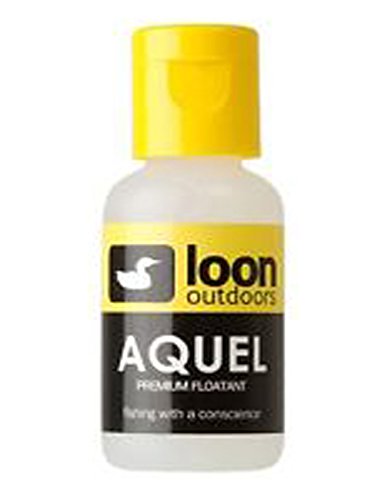
Loon Outdoors Aquel Dry Fly Floatant, 1/2oz
A gel floatant is the difference between a dry fly and a wet one. Apply it to a dry fly before the first cast, never to a fly that is already soaked, because gel on a wet fly traps the water inside the hackle.
Best for: Every angler fishing anything on the surface, on every trip.

RIO Powerflex Strong Tippet, 5X 30yd
Nylon sits in the film rather than pulling the fly under, and it stretches enough to survive a hard hookset on light material. This is the correct tippet family for dry flies, and fluorocarbon is not.
Best for: Dry fly work in 4X through 6X, which covers most trout on most rivers.
Skip it if: Deep nymph droppers, where the extra density of fluorocarbon is the point.
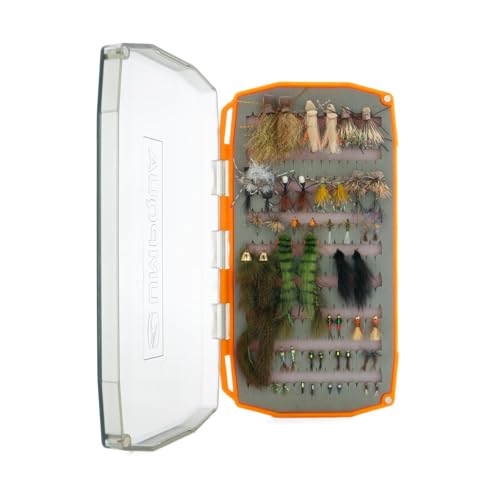
Umpqua Signature Master Trout Assortment Fly Box
A boxed assortment tied on quality hooks, which is the difference you notice when a good fish leans on a size 18. Buying a box like this is a one-off build rather than a restock.
Best for: Filling a box from nothing, or replacing one that went into the river.
Skip it if: Replacing six lost flies. Buying a large assortment to fill small gaps is the most expensive way to solve a cheap problem.

Fly Fishing Nippers with Retractor and Knot Tool
Dry fly fishing is fly changing. A worn nipper crushes tippet instead of cutting it, and a crushed end will not thread a size 20 hook eye in fading light no matter how good your eyes are.
Best for: Anyone changing flies more than a few times a session, which is everyone fishing dries.
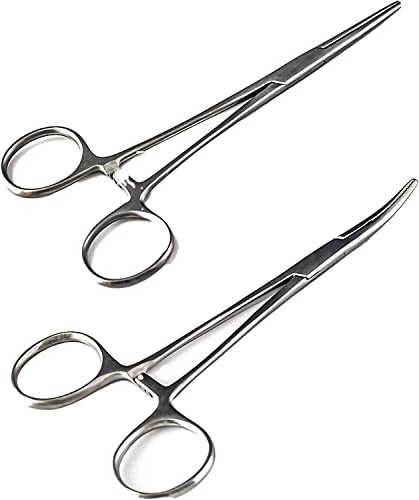
Fishing Forceps, 5in curved and straight pair
Small barbless dry fly hooks come out cleanly with forceps and badly with fingers. Faster release means less handling, which matters most on the warm water days when dry fly fishing is at its best.
Best for: Catch and release on small hooks.

Bead Head Prince Nymph Assortment, 12 flies
The honest companion to a dry fly box. A bulge in the surface with no break in it is a fish eating just under the film, and that is a nymph or emerger problem rather than a dry fly problem.
Best for: Dropping a small nymph under a buoyant dry when the rises stop breaking the surface.
Specs are the manufacturer's published figures. Prices and stock change constantly, so confirm on the retailer page. We earn commissions from Backcountry and from qualifying Amazon purchases.
How do you use floatant properly?
Most people apply floatant at the wrong time and to the wrong fly, and then conclude their flies do not float well.
Apply gel floatant to a dry fly, before the first cast. A tiny amount rubbed between finger and thumb and worked into the hackle and body, not a blob. A Loon Outdoors Aquel Dry Fly Floatant, 1/2oz treated fly that has never been wet will float for a long time. That is the whole technique on a fresh fly.
Never put gel on a soaked fly. This is the error that matters. Gel over water seals the water inside the hackle, and the fly becomes permanently heavier and sits lower. Once a fly is waterlogged the sequence is different.
- Squeeze it dry. Press the fly firmly in an absorbent cloth, a shirt tail, or a patch of amadou. Squeeze rather than rub, so you do not crush the hackle.
- False cast a few times. Three or four sharp false casts throw a surprising amount of remaining water off.
- Use a desiccant powder if you carry one. Drop the fly in the pot, shake, and it comes out dry and often re-dressed at once.
- Then, and only then, gel again, or simply tie on a fresh fly and let the wet one dry on your hat band while you fish.
A fly that has caught a fish is soaked in slime as well as water, so it needs a rinse and a squeeze before any treatment. This is also why carrying several of a working pattern matters more than carrying many patterns: rotating three identical flies is faster and more effective than resurrecting one.
When do you change something, and what do you change first?
A refusal is information. A fish that rises to the fly and turns away at the last moment has seen something it did not like, and the order in which you respond determines whether you solve it.
First, fix the drift. Move so you can approach from a better angle, reach cast further upstream, or get closer so there is less line on the water. Most refusals are micro drag you cannot see from where you are standing.
Second, go smaller in the same pattern. Two sizes down in the fly you are already fishing beats a new pattern the same size far more often than it should. A size 18 of the thing that got a look is a better bet than a size 14 of something new.
Third, go finer and longer on the tippet. Dropping from 5X to 6X at 0.005 inches and adding a foot changes how the fly sits and how it drifts. This is where most difficult fish are actually solved.
Fourth, and only fourth, change the pattern. By this point you have eliminated the things that are actually your fault. Reach for a lower riding profile before a completely different insect: an emerger or a spent pattern rather than another high floating dun. The dry fly picks cover the small set of patterns that genuinely earn their space in a box.
How do you set the hook without breaking the tippet?
This is where dry fly anglers lose fish, and the fix is counterintuitive: slower and lower, not harder.
On 6X at 0.005 inches you have very little margin. A hard overhead strike loads the rod tip against a fixed hook in a fraction of a second, and the weakest link in the system, which is deliberately the tippet, is what gives.
Wait for the fish to turn down. The classic instruction is to say a short phrase before lifting, and the reason it works is that a trout takes a dry fly on the way up and closes its mouth on the way down. Strike on the way up and you pull the fly out through an open mouth.
Sweep the rod low and to the side rather than punching it up. A low side sweep draws the hook into the corner of the jaw, which is the strongest hold available, and it keeps the rod in a bend that can absorb a lunge. Lifting straight up puts the rod tip in the worst position to cushion anything.
Do not clamp the line. Hold the running line under a finger with enough friction to set, and let it slip if a good fish takes off. A clamped line and a light tippet is a snapped tippet, every time.
Then use Fishing Forceps, 5in curved and straight pair to back the barbless hook out quickly, keep the fish in the water, and get it back. On the warm calm days when dry fly fishing is at its best, the water holds the least oxygen, which makes a fast release matter more than usual.
Frequently asked questions
What is drag in dry fly fishing and how do you stop it?
Drag is the fly moving at a different speed to the water it sits on, dragged by the current pulling on the line and leader. Trout reject a dragging fly almost every time because no real insect behaves that way. You beat it by putting slack between the fly and the line: a reach cast that lays the line upstream before it lands, a mend after it lands, and a longer, finer tippet that hinges instead of transmitting pull.
What tippet size do I use for a size 16 dry fly?
Start at 4X. The rule of four says divide the hook size by four to get a starting tippet X, and 16 divided by 4 is 4X, which is 0.007 inches. It is a starting point rather than a law. On flat, clear water with fussy fish, going one size finer to 5X usually gets more takes, and on fast broken water you can go one heavier without the fish noticing.
How do you dry a waterlogged dry fly?
Do not put gel floatant on it, because gel over a wet fly traps the water inside the hackle. Squeeze the fly firmly in an absorbent cloth or a patch of amadou, false cast it a few times to throw the remaining water off, then apply a desiccant powder if you carry one. Only once it is genuinely dry does gel floatant go back on, and gel is best applied before the first cast of all.
Should I set the hook harder or softer on a dry fly?
Softer, and later than instinct wants. On 6X at 0.005 inches, a hard overhead strike breaks the tippet or tears a small hook out of a soft mouth. Wait until the fish has turned down with the fly, then lift the rod smoothly and sweep it low to the side rather than punching it up. Let the rod bend absorb the load, and keep the line under a finger rather than clamped.
Should I change the fly pattern or the presentation first?
Presentation, almost always. If a fish refuses, the odds are the drift dragged or the leader landed over the fish rather than the pattern being wrong. Work through it in order: get a longer drag free drift, then go one size smaller in the same pattern, then go finer on the tippet, and only then change the pattern. Most fly changes are a way of avoiding a casting problem.
How long should a dry fly leader be?
Nine feet is the standard and twelve is better on flat water. A longer leader puts more distance between the fly line, which lands heavily and casts a shadow, and the fly. The taper matters as much as the length: roughly 60 percent butt, 20 percent mid and 20 percent tippet, with the butt about two thirds the diameter of the fly line tip so energy transfers smoothly.
How we choose: we compare published manufacturer specifications, line and leader standards, and verified owner reviews across retailers. We do not test gear in person, and every diameter, grain weight and breaking strength quoted here is the manufacturer's published figure unless we say otherwise, so check the spool label before you trust a number. Nothing here is professional instruction. Wading moving water is the real hazard in this sport: wear a snug wading belt, know the water temperature, and turn back rather than push through a crossing you are unsure of.