Best Dry Flies for Trout
Six patterns cover almost all trout dry fly fishing: Adams, Parachute Adams, Elk Hair Caddis, Blue Winged Olive, Stimulator and a foam hopper. Carry four of each in three sizes, which is 72 flies, and match tippet with the rule of four: divide the hook size by 4, so a size 16 fly starts on 4X at 0.007 inches.
Fly selection is where new anglers spend the most money and get the least return. The honest finding from comparing commercial assortments against the patterns that actually appear in guides' boxes is that a very small number of patterns, in the right sizes, catches nearly every trout that is willing to eat off the surface. The rest of a full fly bin is variation, confidence and marketing. This page covers the six patterns worth owning, what sizes to carry, how many of each, and what it costs to keep the box full, because flies are a consumable and the restock is the real annual expense.
Which dry fly patterns actually catch trout?
A dry fly is a pattern tied to float in or on the surface film, imitating an adult insect on the water rather than a nymph beneath it. The six below are not the six prettiest or the six most specific. They are the six that cover the widest range of situations with the fewest boxes.
The Adams is the general mayfly. Grey body, grizzly and brown hackle, and a silhouette that reads as a great many different mayflies to a trout looking up at it through moving water. If you carry one dry fly, carry this one.
The Parachute Adams is the same idea with the hackle wound horizontally around a vertical post. That changes two things that matter. The body sits down in the film rather than perched above it, which is how a real emerging or spent mayfly sits, and the white post is visible at distance in broken light. For many anglers it outfishes the standard Adams and it is far easier to track.
The Elk Hair Caddis covers the other enormous insect family. Caddis are everywhere, they hatch through most of the season, and a caddis adult skitters rather than drifts passively, so this pattern also gives you something to twitch when a dead drift is being refused.
The Blue Winged Olive is the small dark mayfly that hatches in the cool grey weather at both ends of the season, often when nothing else is moving. It is a small fly, usually sizes 18 to 22, and it is the pattern that turns a miserable overcast afternoon into the best fishing of the trip.
The Stimulator is the attractor and the searching pattern. It is buoyant, it is visible, it reads as a stonefly or a large caddis, and it holds up a dropper nymph without sinking. On fast pocket water where fish decide in a fraction of a second, an attractor beats an exact imitation.
A foam hopper covers terrestrial season, which on many rivers is the most productive dry fly fishing of the year. Grasshoppers, beetles and ants blow onto the water through the warm months, and trout that have ignored a size 20 olive all week will move a foot to eat a size 10 hopper. Foam bodies float indefinitely and survive being chewed.
| Pattern | Imitates | Sizes | Carry | When it earns its place |
|---|---|---|---|---|
| Adams | General mayfly adult | 12 to 18 | 12 | Any hatch you cannot identify |
| Parachute Adams | Mayfly emerger and spinner | 14 to 20 | 12 | Flat water, low light, long drifts |
| Elk Hair Caddis | Adult caddis | 12 to 18 | 12 | Evening caddis, riffles, twitched retrieves |
| Blue Winged Olive | Small dark mayfly | 18 to 22 | 12 | Cool overcast days at both ends of the season |
| Stimulator | Stonefly, large caddis, attractor | 8 to 14 | 12 | Fast pocket water and as a dry dropper anchor |
| Foam hopper | Grasshopper and terrestrials | 8 to 12 | 12 | Warm months, grassy banks, windy afternoons |
That table adds up to 72 flies, which is 4 of each pattern in 3 sizes. It fits in one side of a two box set such as the SF Waterproof Slit Foam Fly Boxes, 2 pack , it costs a fraction of a curated boxed assortment, and it is a genuinely complete dry fly kit for trout anywhere in North America.
How do you pick the size, when the pattern is right and the fish still refuse?
Size is the variable that decides more refusals than pattern does. Trout eating a hatch are keyed to a silhouette and a size, and a fly that is one size too large is the most common reason a correct pattern gets ignored.
The field method is simple. Catch a natural insect off the water or off your sleeve, hold it against the fly in your hand, and match the body length rather than the wing. If your fly looks bigger, go down a size, then another. Very few anglers ever fish too small.
Hook sizes run backwards, which is the part that confuses everyone at first: the larger the number, the smaller the hook. A size 20 is tiny and a size 8 is large. Gauge, gape and wire thickness all shift with size too, and the fly size to hook size chart lays out how those translate into actual dimensions.
Season and water type narrow it further. Small dark mayflies dominate the cool grey weather at each end of the season and want sizes 18 to 22. Caddis and general mayfly activity through the warm middle of the season sits in the 14 to 16 range. Terrestrials take over in the back end of summer at sizes 8 to 12. Fast broken water forgives a size or two either way because the fish has less time to inspect. Flat spring creek water forgives nothing.
What tippet goes with which fly size?
The rule of four: divide the fly's hook size by 4 and that is a starting tippet X rating. A size 16 fly divided by four gives 4X.
Tippet X rating is a legacy scale where the X number subtracted from 0.011 inches gives the diameter in inches. So 4X is 0.007 inches, 5X is 0.006 inches and 6X is 0.005 inches. Breaking strength is not part of the X rating and varies by material and brand, so read the spool label rather than assuming.
| Hook size | Divided by 4 | Tippet X | Diameter (in) | Typical use |
|---|---|---|---|---|
| Size 8 hopper | 2 | 2X | 0.009 | Big foam terrestrials, windy banks |
| Size 12 stimulator | 3 | 3X | 0.008 | Attractors, dry dropper rigs |
| Size 16 Adams | 4 | 4X | 0.007 | The default trout dry fly setup |
| Size 18 caddis | 4.5 | 5X | 0.006 | Selective fish, moderate flats |
| Size 20 olive | 5 | 5X | 0.006 | Round up, or 6X on very flat water |
Two adjustments to the rule. On flat, clear, slow water, go one X lighter than the rule gives you, because tippet diameter is what the fish sees and drag is what makes it refuse. In wind, with heavy fish, or around structure, go one X heavier and accept fewer takes in exchange for landing what you hook. Working it through once on the leader and tippet calculator makes the relationship between leader length, tippet diameter and fly size concrete rather than mysterious.
Flies, boxes and floatant worth buying

Woolly Bugger Streamer Assortment, 24 flies with box
Not a dry fly, and the first assortment most anglers should own anyway. A Woolly Bugger fished on a swing or stripped covers trout, bass and panfish, and on a day when nothing rises it is the pattern that saves the trip.
Best for: A first box, and every box after it, in black, olive and brown.
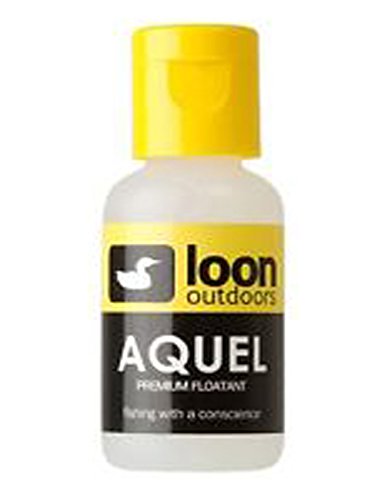
Loon Outdoors Aquel Dry Fly Floatant, 1/2oz
A gel floatant is what makes a dry fly a dry fly after the first two casts. Worked into a dry hackle before it ever gets wet, it keeps the fly riding in the surface film instead of sinking into the drift.
Best for: Every angler fishing dries, applied before the fly is wet rather than after.

SF Waterproof Slit Foam Fly Boxes, 2 pack
Slit foam holds a hook by the bend without crushing hackle, and a clear lid lets you find a size 18 without opening the box in the wind. Two boxes lets you split dries from everything else, which is how you actually find a fly.
Best for: Sorting a growing collection before it becomes an unsearchable pile.

Bead Head Prince Nymph Assortment, 12 flies
Trout feed subsurface for the overwhelming majority of the time, so a dry fly box without a nymph box is a half built system. Bead head patterns in sizes 12 to 18 cover the searching work between hatches.
Best for: The other ninety percent of the day, when nothing is rising.

Clouser Minnow Saltwater Assortment, 12 flies
A weighted baitfish pattern on saltwater grade hooks, which is the assortment to add when you start fishing bass ponds and coastal water rather than trout streams.
Best for: Bass, pike and coastal species on a 7 or 8 weight.
Skip it if: A trout only angler. These hooks are far too heavy for a spring creek and the sizes are wrong for anything that eats mayflies.
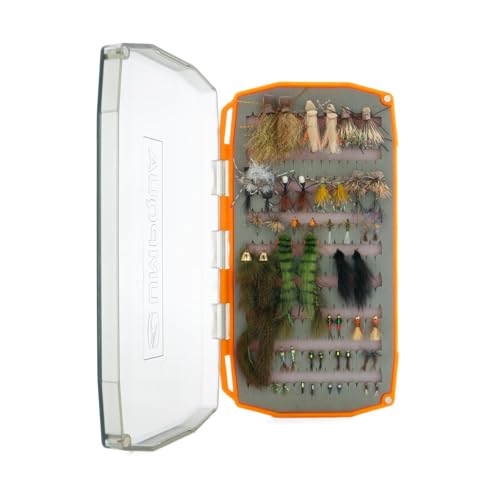
Umpqua Signature Master Trout Assortment Fly Box
A curated boxed assortment from a commercial tyer, arriving sorted and complete rather than assembled over three seasons of shortages. It removes the single most common cause of a wasted evening: not having the size the fish want.
Best for: A travelling angler, or someone who values arriving prepared over building a box slowly.
Skip it if: A first season angler. You will lose a large fraction of these flies to trees, rocks and bad knots before you know which ones you actually use, and the cheap assortments teach you that lesson for a tenth of the money.
Specs are the manufacturer's published figures. Prices and stock change constantly, so confirm on the retailer page. We earn commissions from Backcountry and from qualifying Amazon purchases.
Why do you lose so many flies, and what should you budget?
Nobody warns beginners about this and it is the largest recurring cost in the sport after the initial outfit. Flies are lost, not worn out, and the loss rate is steady.
The four causes, in rough order of frequency. Trees and brush on the back cast, which is by far the biggest. Rocks and submerged wood, mostly on dry dropper rigs where the nymph finds the bottom. Break offs, either a fish or a wind knot, which is why knot lubrication matters. And retirement, when the hackle is crushed flat or the hook point has rolled over after contact with stone.
A realistic figure is three to six flies per day on the water. At 4 flies a trip and 25 trips, that is 100 flies a season, and at roughly two to three dollars each you are looking at somewhere near $250 a year in flies alone. That figure is the entire argument for buying inexpensive assortments while you are learning: an angler in a first season loses a much higher fraction than that, and the difference between a two dollar fly and a five dollar fly hanging in a cottonwood is three dollars.
Three habits cut the loss rate meaningfully. Check your knot after every fish and after every snag, because a knot that has been through a break-off has been weakened. Retie a fly onto fresh tippet when the tag end looks curled, because curled tippet has been stressed. And carry a cheap fly retriever or accept the loss quickly rather than pulling straight back on a snag, which straightens hooks and costs you a fly and a leader instead of just a fly. The consumables restock guide puts flies, tippet, leaders and floatant on one re-order list so you buy once a season rather than in a panic.
How do you actually use floatant?
A dry fly stops being a dry fly the moment it takes on water, and floatant is the difference between a fly that fishes for twenty casts and one that fishes for three.
Apply gel floatant to a completely dry fly, before it ever touches the water. Put a very small amount on a fingertip, work it into the hackle, the wing and the body, and let it set for a few seconds. A Loon Outdoors Aquel Dry Fly Floatant, 1/2oz lasts a long time at that dose, and using more does not help.
The mistake almost everyone makes is applying floatant to an already soaked fly. Gel on a wet hackle seals the water in and the fly sinks faster than before. The correct sequence when a fly has drowned is to false cast the water off, or squeeze it in an absorbent cloth or a desiccant powder, and only then treat it again. Powder desiccants and gels do different jobs and both have a place: gel for pre-treatment, powder for revival.
One more note that matters for the fish. Do not treat the tippet with floatant. A floating tippet casts a heavy shadow line on flat water and puts fish down. If anything, sink the last section with a little mud or a commercial sinkant. Presentation detail like this is covered properly in the dry fly guide, which is where the drift, the mend and the drag problem get their due.
Should you buy a big boxed assortment or build up slowly?
Both approaches work and they suit different people, so here is the honest split.
Build slowly if you are in your first two seasons. You do not yet know which patterns your water wants, your loss rate is at its highest, and cheap assortments such as the Bead Head Prince Nymph Assortment, 12 flies and the Woolly Bugger Streamer Assortment, 24 flies with box let you learn that for very little money. Add a dozen dries in the core patterns above and you are fully equipped.
Buy the boxed assortment if you travel to fish, or if the value of arriving prepared is higher than the money. A curated box such as the Umpqua Signature Master Trout Assortment Fly Box arrives sorted, complete and tied on good hooks, and it removes the specific failure of standing in a river watching a hatch you have no size for. It is expensive, and it is expensive for a reason that has nothing to do with catching more fish on an average day.
Whichever route you take, keep dries and everything else in separate boxes. Nymphs and streamers carry beads and weight that crush dry hackle in a shared compartment, and a crushed hackle is a fly that will not float no matter how much floatant you put on it. That is the whole reason a two box set exists.
Then fish them. A size 16 Parachute Adams on 4X, drifted without drag, catches more trout than any amount of further reading, and at these prices there is nothing left to research.
Frequently asked questions
What dry flies should a beginner actually carry?
Six patterns cover nearly everything: an Adams, a Parachute Adams, an Elk Hair Caddis, a Blue Winged Olive, a Stimulator and a foam hopper. Carry each in two or three sizes rather than adding more patterns. A Parachute Adams in sizes 14, 16 and 18 alone will catch trout in most of North America, because it is a credible imitation of a great many mayflies rather than an exact copy of one.
What size dry fly should I use?
Match the naturals on the water rather than the pattern in a catalogue. If you can catch an insect, hold it beside your fly, and size down if yours looks bigger. As a default, sizes 14 and 16 cover most mayfly and caddis situations, 18 and 20 cover small olives and midges on flat water, and 8 to 12 covers hoppers, stoneflies and attractor dries on fast broken water.
What is the rule of four for tippet size?
Divide the fly hook size by four to get a starting tippet X rating. A size 16 fly divided by four gives 4X. It is a starting point rather than a law, and on flat clear water going one size lighter usually gets more takes. Tippet X ratings work by subtraction from 0.011 inches, so 4X is 0.007 inches and 5X is 0.006 inches in diameter.
How many flies do I lose in a season?
Budget roughly three to six flies per day on the water once you account for trees, rocks, snapped tippet and flies retired because the hackle is crushed. Twenty five trips a season at four flies a trip is a hundred flies, which at two to three dollars each is a real annual line item. That is why fly selection is a repeat purchase rather than a one time buy.
How do I use floatant properly?
Apply gel floatant to a completely dry fly before you ever cast it, working a small amount into the hackle and body with your fingers, then let it set for a moment. Floatant applied to an already soaked fly seals water in rather than keeping it out. Once a fly is waterlogged, dry it with a false cast or a squeeze in an absorbent cloth first, then treat it again.
Do expensive flies catch more fish than cheap ones?
The hook does, and the hackle does. Cheap assortment flies are usually tied on softer wire that opens under pressure and with hackle that crushes after a few fish, while a commercially tied pattern from a known house uses a sharper, harder hook. The pattern and size matter far more than either. Buy cheap assortments while you are still losing flies constantly, then upgrade the patterns you actually use.
How we choose: we compare published manufacturer specifications, line and leader standards, and verified owner reviews across retailers. We do not test gear in person, and every diameter, grain weight and breaking strength quoted here is the manufacturer's published figure unless we say otherwise, so check the spool label before you trust a number. Nothing here is professional instruction. Wading moving water is the real hazard in this sport: wear a snug wading belt, know the water temperature, and turn back rather than push through a crossing you are unsure of.