Fly Fishing Consumables and Restock Guide
A season of trout fishing consumes under $150 of tippet, leaders, flies, floatant and split shot at 15 days on the water, and under $400 at 50 days. That heavy season figure is about 3.7 times the price of a Redington Path fly rod, which is the point: the rod is bought once and the consumables are bought every year.
A fly rod is a one-time purchase. Tippet, leaders, flies, floatant, split shot and indicator yarn are not. They are consumed, and they are consumed faster than almost anyone budgets for, which is why the second season of fly fishing quietly costs more than people expect even though nothing was upgraded. Run the arithmetic on published prices and a light season of 15 days on trout water comes to under $150 in consumables, while a heavy season of 50 days comes to under $400. Those figures are roughly 1.5 and 3.7 times the price of an entry level 9 foot 5 weight rod, every year, forever.
What does a season of trout fishing actually consume?
A consumable is anything that leaves the river with the fish, the streambed or the willows instead of with you. In fly fishing that is a longer list than in almost any other tackle sport, because the terminal end of the system is deliberately built to be sacrificial.
Tippet goes first and goes fastest. Every single fly change costs you six to ten inches, because you cut the old fly off with a tag and tie the new one on. Ten fly changes in a day is an ordinary day, which is five or six feet of tippet gone before you count a single break-off. Add a fish lost on the strike, a wind knot you find at midday, and a dropper tag rebuilt three times, and a single productive day can consume 15 feet of tippet.
Tapered leaders go next. A leader is not consumed in one event, it dies by attrition. You add tippet, then you add tippet to the tippet, and eventually the 9 foot taper you bought is a 7 foot butt with a lumpy 4 foot afterthought on the end that will not turn a fly over. Willows also claim whole leaders outright, and so does any tree with a fly in it and a knot above the fly that is stronger than the tippet.
Flies go continuously. Two to five a day is a normal loss rate, split between backcast snags in streamside brush, bottom snags on a weighted nymph drift, and break-offs on the strike. At budget assortment prices, that is somewhere from under $50 to under $250 across a season depending on how many days you fish and how deep you fish them.
Floatant, split shot and indicator yarn go quietly. Nobody notices these emptying, which is exactly why they run out on the water rather than in the garage. A gel floatant bottle covers a light season if you use it correctly and about a third of a heavy one if you keep applying it to a fly that is already wet.
Fly line dressing is the odd one out: it is a consumable that extends the life of a non-consumable. A cleaned and dressed line shoots further, floats higher and lasts longer, and a RIO Fly Line Cleaning Kit with Dressing is the cheapest performance upgrade available to anyone who already owns a decent line.
How much do fly fishing consumables cost per season?
The table below is built from published prices on the exact products this site recommends, at quantities that match two honest seasons. Nothing here is a guess about what things might cost. It is what these specific items cost multiplied by how many of them a season burns.
| Consumable | Unit budget | Light qty | Light budget | Heavy qty | Heavy budget |
|---|---|---|---|---|---|
| Nylon tippet spools, 30yd, in your two working sizes | Under $25 | 3 | Under $50 | 8 | Under $100 |
| Fluorocarbon tippet spool, 30yd, for subsurface work | Under $25 | 1 | Under $50 | 2 | Under $50 |
| Tapered leaders, 9ft 5X, quality 3 pack | Under $25 | 1 | Under $50 | 3 | Under $100 |
| Tapered leaders, 9ft 5X, budget 6 pack | Under $25 | 1 | Under $50 | 2 | Under $50 |
| Nymph assortment, 12 flies | Under $25 | 1 | Under $50 | 5 | Under $100 |
| Streamer assortment, 24 flies | Under $25 | 1 | Under $50 | 2 | Under $50 |
| Dry fly floatant, gel | Under $25 | 1 | Under $50 | 3 | Under $50 |
| Removable split shot assortment | Under $25 | 1 | Under $50 | 2 | Under $50 |
| Yarn strike indicator wool | Under $25 | 1 | Under $50 | 2 | Under $50 |
| Fly line cleaning kit with dressing | Under $25 | 1 | Under $50 | 1 | Under $50 |
| Season total | Under $150 | Under $400 |
Two things fall out of that table. The first is that tippet and leaders together are the largest single block of spending, ahead of flies, which surprises people who assume flies are the money pit. The second is that the heavy column is not double the light column, it is closer to two and a half times, because the items that scale with days on the water scale hard while the fixed items like a line cleaning kit do not scale at all.
If you want to see where each of those line items sits against the alternatives, the tippet roundup and the tapered leader roundup compare the spools and packs directly, and the dry fly picks cover the surface patterns that get lost most often.
Why does tippet run out faster than anything else?
Tippet is the thin final section of the leader, sold on spools by X rating, and the X rating is a legacy scale where the number subtracted from 0.011 inches gives the diameter: 5X is 0.006 inches, 4X is 0.007 inches, and so on down the tippet size chart. It is deliberately the weakest link in the system, which means it is deliberately the part designed to be lost.
That design is correct and you should not fight it. A break at the tippet costs you a fly. A break higher up costs you a fly, a leader, and sometimes a fly line tip. So the sport is arranged so that the cheapest component fails first, and the direct consequence is that the cheapest component is also the one you buy over and over.
Four separate mechanisms eat tippet, and knowing them tells you where to buy in quantity.
- Fly changes. Six to ten inches each, and this is the biggest consumer by a wide margin. Ten changes is five feet.
- Break-offs. The whole tippet section, plus the fly. Common on the strike with light tippet and a fast rod.
- Wind knots. An overhand knot thrown into the tippet by a tailing loop cuts the strength of that section drastically. The correct response is to cut it out, not to fish it, and cutting it out costs a foot or more.
- Abrasion. Rock, timber and fish teeth all scuff the last few feet. Run the section through your fingers periodically and cut back to clean material when it feels rough.
The practical conclusion: carry more of the sizes you use than you think you need. Running out of 5X on a good afternoon is the single most avoidable way to end a day early, and a Tippet Spool Ring and Tender Set, 4 pack that keeps four spools clipped together in a pocket is what makes carrying spares painless.
Does tippet go bad, and how long does a spool actually last?
Yes, and the answer differs completely by material. This is the most useful thing on this page for anyone who has a drawer of old spools.
Nylon monofilament degrades. Nylon absorbs water, and repeated wetting and drying cycles change its properties. It is also damaged by ultraviolet light and by heat, which means a spool that has spent two summers on a vest hanging in a sunny garage, or in a car, has lost real strength that no inspection will reveal. Nylon has a genuine shelf life measured in a small number of seasons.
Fluorocarbon is far more stable. It absorbs almost no water and it resists ultraviolet exposure, so a fluorocarbon spool stored reasonably will still be close to its rated strength years later. The trade is price: fluorocarbon runs about 2.1 times the cost of nylon per spool at the products compared here, on the same 30 yard spool.
| Property | Nylon monofilament | Fluorocarbon | Replace spool after |
|---|---|---|---|
| Water absorption | Absorbs water, softens and loses strength when wet | Absorbs almost none, strength barely changes wet | 2 to 3 seasons |
| Ultraviolet exposure | Degraded by sunlight, keep spools in a pocket or box | Highly resistant to ultraviolet light | 4 or more |
| Heat | A hot car or dashboard is genuinely damaging | Tolerates heat far better | 4 or more |
| Density in water | Near neutral, floats in the film with dressing | Denser than water, sinks | Not applicable |
| Abrasion resistance | Moderate, scuffs on rock | Higher, the reason it goes on droppers | Not applicable |
| Stretch | Higher, forgives a hard hookset | Lower, transmits the strike but breaks quicker | Not applicable |
The rule that follows: write the year on a nylon spool with a permanent marker the day you open it, and bin nylon spools that are several seasons old rather than discovering the problem when a good fish is attached. A spool costs less than one lost fish is worth to you. Fluorocarbon does not need the same treatment, which is part of what you are buying at the higher price. The nylon against fluorocarbon comparison works through the rest of the trade in detail.
What should you buy in bulk and what should you buy one at a time?
Bulk buying is only a saving if you use the item before it degrades and if you already know it works on your water. Both conditions have to be true. That splits the list cleanly.
Buy in bulk. Split shot, because it never degrades and a SF Micro Removable Split Shot, 112 pieces in 4 sizes assortment with four sizes covers every depth problem for years. Indicator yarn, for the same reason: a bulk pack of New Zealand Strike Indicator Wool, bulk outlasts several seasons and you will not find yourself improvising with a bit of leader. Tapered leaders in your standard length and X, because a 9 foot 5X is the trout default and a six pack like the SF Pre-Tied Loop Tapered Leaders, 9ft 5X 6 pack is close to a whole light season. Nylon tippet in your two working sizes, with the caveat about age above.
Buy singles. Floatant, because gel formulations are a personal preference and a bottle of Loon Outdoors Aquel Dry Fly Floatant, 1/2oz lasts long enough that buying three of the wrong one is a real waste. Fluorocarbon in sizes you rarely use, since the spool will still be good in three seasons and there is no urgency. Any fly pattern you have not proven on your own water, because the most expensive thing in a fly box is 40 flies of a pattern the fish there do not eat.
Buy once, then maintain. Fly boxes are not consumables but they are how the consumables survive. A pair of SF Waterproof Slit Foam Fly Boxes, 2 pack with slit foam keeps hooks separated and dry, which matters because the fastest way to lose a dozen flies is to close a wet box and open it a fortnight later to a row of rusted hooks. Dry the box before it is closed and the flies you did not lose stay usable.
How many flies do you really lose, and what does that cost?
Fly loss is the most emotionally distorted number in the sport. People remember the expensive fly they lost on the first cast and forget the twelve cheap nymphs that quietly disappeared over a season.
A realistic loss rate is two to five flies per day. The low end is a dry fly angler on open water with room for a backcast. The high end is a nymph angler working a weighted rig close to a rocky bottom, which is exactly where the fish are and exactly where the flies stay. Over 15 days that is roughly 30 flies, and over 50 hard days it is roughly 250, which at budget assortment prices costs under $50 to under $250.
That number matters for one reason: the fear of losing flies makes people fish the wrong water. The productive lie is behind the log, under the willow, on the seam next to the rock shelf. If a fly costs about a dollar, casting into those places is obviously correct. If you have convinced yourself flies are precious, you fish the safe middle of the river and catch less.
Practical ways to cut losses without fishing timidly: carry a Fishing Forceps, 5in curved and straight pair so you can back a hook out of a fish quickly instead of breaking off, use a slightly heavier tippet than the minimum when you are working structure, tie the dropper tag off a knot so a snagged bottom fly breaks and leaves the top fly, and check behind you before every backcast in brush. A Woolly Bugger Streamer Assortment, 24 flies with box assortment is worth having as a designated snag pattern for exactly this reason.
What should you check before every single trip?
This is the checklist that prevents the specific failure of driving two hours to discover you have four inches of 5X left. Run it the evening before, not in the car park.
| Item | Restock trigger | Carry on the water | Reorder at |
|---|---|---|---|
| Tippet, primary size | Spool feels light or is visibly under a third | 2 spools | 1 spare |
| Tippet, secondary size | Any spool over 3 seasons old, regardless of level | 1 spool | 1 spare |
| Tapered leaders | Fewer than 2 unopened packets in the pack | 2 leaders | 3 in reserve |
| Dry flies | Any row in the box with a gap wider than 3 slots | Full box | Rebuild rows |
| Nymphs and beadheads | Fewer than 4 of your confidence pattern | Full box | 1 assortment |
| Floatant | Bottle rattles or squeezes hollow | 1 bottle | 1 spare |
| Split shot | Any size compartment empty | 1 dispenser | 1 spare |
| Indicator yarn | Under a hand span of wool left | 1 bundle | 1 spare |
| Nippers and forceps | Nippers no longer cut 5X in one squeeze | 1 each | Replace |
| Fly line | Line hinges, sinks or feels tacky in the hand | Clean it | Dress before trip |
Two entries there deserve a note. Nippers are a consumable with a long life rather than a permanent tool. A worn nipper crushes tippet instead of cutting it, leaving a ragged end that will not thread a size 18 hook eye, and every angler who has stood in a river swearing at a fly has usually blamed their eyes when the real problem was the cutter. A Fly Fishing Nippers with Retractor and Knot Tool with a retractor solves both the cutting and the losing.
Fly line is not a consumable but it behaves like one if you neglect it. Lines pick up algae, sunscreen and grit, and a dirty line sinks, hinges and shoots badly. Cleaning and dressing takes a few minutes and it is the difference between replacing a line every couple of seasons and keeping one for many.
How does the restock spread across a season?
Buying everything at once is how the drawer of degraded nylon happens. Spreading the restock across the season matches spending to use and keeps the nylon fresh.
Before the first trip of the year. This is the big one. Replace all nylon tippet over three seasons old, dress the fly line, buy leaders in quantity, and rebuild the gaps in the fly boxes left from last year. Roughly half of the season total sensibly lands here.
Through runoff and high water. Consumption spikes: heavier flies, more split shot, more break-offs on a bottom you cannot see, and indicator yarn used constantly. Expect to reorder split shot and nymphs here even if you fish fewer days than usual.
Through the warm middle of the season. Dry fly work dominates, so floatant and fine tippet in 5X and 6X carry the load while split shot sits unused. This is the stretch where tippet consumption is highest, because fish are fussier, fly changes are more frequent and the tippet is finer.
The back end of the season. Streamers and bigger water. Heavier tippet, fewer flies lost per day but more expensive ones, and a good time to buy fluorocarbon since it will keep perfectly until next year. It is also the right moment to clean and dress the line one last time before it goes into storage.
Handled that way, the consumables budget stops being a surprise and starts being a line item you can plan. It is also, over any five year window, the larger number: the rod is bought once, and the tippet, leaders and flies are bought every single season for as long as you fish.
The consumables worth keeping stocked

RIO Powerflex Strong Tippet, 5X 30yd
The spool that empties first. Nylon 5X is the default trout tippet, it takes a knot well, it stretches enough to forgive a hard hookset, and at this price you can afford to cut back and retie rather than fishing a frayed section.
Best for: Dry flies, general trout work, and the two or three spools a season most anglers actually use.

SF Pre-Tied Loop Tapered Leaders, 9ft 5X 6 pack
Six tapered leaders in one pack, which is close to a full light season. A budget leader turns over slightly less crisply than a premium one, and that difference is invisible next to the difference between a fresh leader and one you have rebuilt four times.
Best for: Anglers who go through leaders quickly on brushy water and want spares in every pocket.
Skip it if: Flat spring creek work where the last few percent of turnover and suppleness genuinely shows.

RIO Fluoroflex Strong Tippet, 7.3lb 30yd
Fluorocarbon is denser, more abrasion resistant and far more stable in storage than nylon. It costs more per yard, so it earns its place on nymph droppers and streamers rather than on every dry fly.
Best for: Subsurface work, abrasive rock, and spools you want to still trust in two seasons.
Skip it if: Small dry flies, where the extra density pulls the fly down into the film.
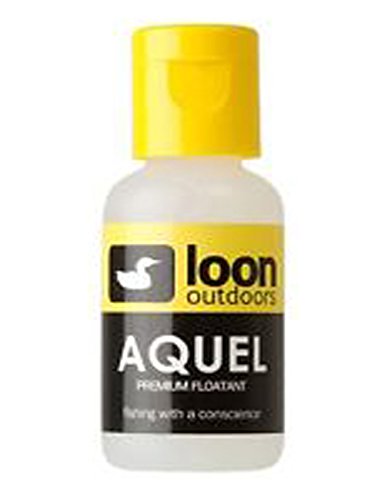
Loon Outdoors Aquel Dry Fly Floatant, 1/2oz
A gel floatant is the cheapest thing on this page that changes a day. A dry fly that sinks is not a dry fly, and one bottle covers a light season if you apply it to a dry fly rather than a wet one.
Best for: Every angler fishing anything on the surface.

Bead Head Prince Nymph Assortment, 12 flies
Flies are consumed, not owned. An assortment in sizes 12 to 18 replaces the ones the streambed and the willows took, at a cost per fly low enough that fishing the productive water becomes an easy decision.
Best for: Rebuilding a nymph box after a season of snags.
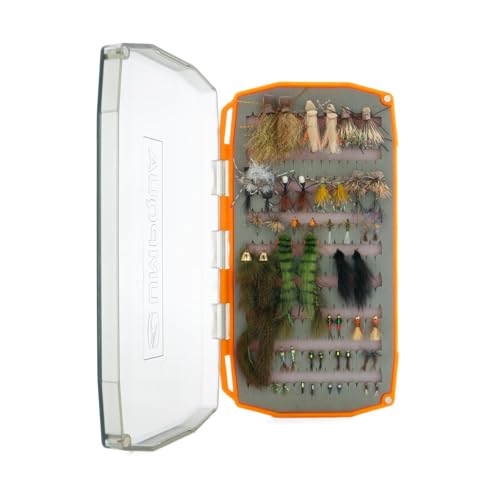
Umpqua Signature Master Trout Assortment Fly Box
A full boxed assortment from a name that ties on quality hooks, which is the difference you feel when a good fish leans on a size 18. This is a one-off box build rather than a restock item.
Best for: Someone starting a serious box from nothing, or replacing a box that went into the river.
Skip it if: Anyone restocking. Buying a large assortment to replace six lost flies is the most expensive way to solve a cheap problem.
Specs are the manufacturer's published figures. Prices and stock change constantly, so confirm on the retailer page. We earn commissions from Backcountry and from qualifying Amazon purchases.
Frequently asked questions
How many spools of tippet does a season of trout fishing use?
Most anglers use three to eight 30 yard spools a season across two or three sizes, with 5X and 4X emptying first. Each fly change costs six to ten inches, each break-off costs the whole tippet section, and rebuilding a leader from the taper costs several feet at once. Nymph anglers burn more than dry fly anglers because the dropper tag gets rebuilt constantly and the bottom takes flies.
Does fly fishing tippet expire on the spool?
Nylon degrades and fluorocarbon largely does not. Nylon absorbs water, loses strength when repeatedly wetted and dried, and is damaged by ultraviolet light and heat, so a spool left on a dashboard for two summers is not the line it was. Replace nylon spools that are several seasons old. Fluorocarbon absorbs almost no water and resists ultraviolet exposure, so it stores far better and can be kept for years.
What should I buy in bulk and what should I buy one at a time?
Buy the things that do not degrade and that you certainly use: split shot, indicator yarn, leaders in your standard length and X size, and nylon tippet in your two working sizes. Buy singles of anything that ages or that you are still experimenting with: floatant, specialist fluorocarbon sizes, and any fly pattern you have not proven on your water. Bulk on an unproven pattern is just an expensive drawer.
How many flies does an average angler lose in a day?
Two to five is normal, and a deep nymph day on a rocky bottom can be double that. Losses come from three places: trees and streamside brush on the backcast, rock and timber on the drift, and break-offs on the strike. Cheap assortments cost around a dollar a fly, so the honest way to think about it is that the fly is a consumable and hesitating to fish the snaggy water costs more than the flies do.
How often should I replace a tapered leader rather than add tippet?
Add tippet until the leader stops turning over, then replace it. Every fly change shortens the tippet, and once you have added three or four sections the taper is no longer a taper, it is a series of steps with knots in the wrong places. A practical trigger is when the tippet section reaches roughly twice its original length in patched pieces, or when the leader is visibly kinked.
Is fluorocarbon tippet worth the extra cost over nylon?
For subsurface work, usually yes. Fluorocarbon is denser so it sinks, it resists abrasion better against rock, and it stores for years rather than seasons. For dry flies it is often the wrong choice because that same density pulls a small fly through the surface film. Many anglers run nylon on top and fluorocarbon below, which splits the cost sensibly and puts each material where it earns its price.
How we choose: we compare published manufacturer specifications, line and leader standards, and verified owner reviews across retailers. We do not test gear in person, and every diameter, grain weight and breaking strength quoted here is the manufacturer's published figure unless we say otherwise, so check the spool label before you trust a number. Nothing here is professional instruction. Wading moving water is the real hazard in this sport: wear a snug wading belt, know the water temperature, and turn back rather than push through a crossing you are unsure of.