Fly Fishing Gear Checklist
A complete fly fishing trip checklist runs to 38 items across six groups, of which 25 are genuinely essential and 13 are situational. The items most often forgotten are floatant, spare leaders, a spare tippet spool in the size you actually use, the licence and a dry spare car key. The small tools and safety items together come to under $150 at catalog prices.
Most gear lists fail because they are organised by shop department rather than by job. Sorted by function, the whole thing collapses into six questions: what casts the fly, what connects you to the fish, what you stand in, what keeps you safe, what goes in the pack, and what you always forget. That comes to 38 lines, 25 of which are genuinely essential and 13 of which depend on the water. Run it the evening before, not in the car park, because the car park version is how people discover they have four inches of 5X left.
What actually casts the fly?
This is the group people obsess over and the group that fails least often, because a rod does not quietly run out. The checks here are about condition rather than presence.
The rod wants a look at the ferrules before it goes in the tube. A hairline crack at a ferrule is the most common way a rod dies, and it happens on assembly rather than on a fish. Sections should seat with about a finger width of gap left before they bottom out, which leaves room to re-seat as they wear.
The reel wants the drag backed off between trips. Leaving a drag wound tight compresses the friction surfaces and shortens their life for no benefit. Check the reel seats and locks properly on the rod, because a reel foot that has worked loose during a walk in is infuriating and easy to miss.
The line is the one item in this group that behaves like a consumable. Lines pick up algae, sunscreen and grit, and a dirty line sinks, hinges in the air and shoots badly. Cleaning and dressing it with a RIO Fly Line Cleaning Kit with Dressing takes a few minutes and is the highest value thing you can do to a rod you already own.
The backing and the arbor knot get checked once a season, not every trip. The only thing that matters is that the knot has not worked loose on the spool.
The rod tube is not optional if you are walking any distance. A Clear Creek Fly Rod Tube, 9ft 4 piece exists because rods break in car doors and on the walk in, essentially never while fighting a fish.
What connects you to the fish?
This is the group that runs out, and it is the group that actually ends days early. Everything in it is a consumable, which means the question is never "do I have one" but "do I have enough".
Carry two spare tapered leaders minimum in your standard length and X rating, because a tree takes a whole leader rather than just the tippet, and rebuilding a leader from spools on the bank costs you the best hour of the evening. Carry at least two tippet spools, and make one of them the size you actually fish most rather than a full range of sizes you rarely touch. Every fly change costs six to ten inches of tippet, so ten changes is five feet gone before a single break-off.
Fly boxes should be split by type, typically dries in one and nymphs and streamers in the other, so you are not searching a single enormous box in the wind. A pair of SF Waterproof Slit Foam Fly Boxes, 2 pack is enough for a trout season. The rule that saves flies: the box must be dry before it is closed, or you open it a fortnight later to a row of rusted hooks.
Floatant is the single most forgotten item in the sport, because it is small, it lives in a pocket rather than a box, and it migrates between jackets. A Loon Outdoors Aquel Dry Fly Floatant, 1/2oz in a pocket you always check is worth the small habit, since a dry fly that sinks is not a dry fly.
Split shot and indicators only matter if you are fishing subsurface, but they weigh nothing so they live in the pack permanently. A SF Micro Removable Split Shot, 112 pieces in 4 sizes dispenser with four sizes and a bundle of New Zealand Strike Indicator Wool, bulk cover the whole depth problem. Both last multiple seasons, which is why they are the correct things to buy in bulk. Working out how much of the rest to keep in reserve is what the consumables restock guide is for.
What do you stand in?
Waders and boots are checked at home because there is nothing you can do about a leak once you are three miles up a canyon.
Look for pinhole leaks before the trip, not during it. The usual test is to turn the waders inside out in a dark room with a torch inside, which shows pinholes as points of light. Patch them immediately, because a pinhole grows.
Check the boot laces and the studs. Laces fail at the eyelets and a boot you cannot tighten is a boot that slips at the heel on wet rock. Studs wear down and fall out, and replacing a few costs almost nothing. Pull the gravel guards down over the boot tops when you kit up, because trapped grit abrades the neoprene bootie from the inside and a bootie leak means new waders.
A Riverruns Breathable Wading Jacket is situational rather than essential, but the decision to leave it in the car should be a decision rather than an oversight. Wet and cold together is what turns an ordinary day into a problem.
What keeps you safe?
Wading is the real hazard in fly fishing. Not hooks, not weather, not remoteness. This group is short, cheap and non negotiable.
Polarised sunglasses are eye protection first. A size 14 hook driven past you at casting speed by a gust is the reason, and the fish spotting is a bonus. A brimmed hat does the same job from above. Which pair to buy is covered in the best polarized sunglasses for fly fishing.
A whistle on the pack strap is the one item on this page that nobody carries and everybody should. It works when your voice has gone, it works one handed, and it carries far further over moving water than shouting does. Three blasts is the recognised distress signal.
A water thermometer is genuinely a safety item as well as a fishing one. A Aventik Fly Fishing Stream Thermometer tells you what a swim would actually mean, and cold water removes fine motor control within minutes: fingers stop working before you feel seriously cold, so knots, zips and buckles become impossible. Cold shock on entry is the immediate danger, not hypothermia.
A wading staff turns balancing on two feet into bracing on three. A collapsible Troutbound Collapsible Aluminium Wading Staff, 55.5in lives in a belt holster until it is needed and lets you probe the depth ahead of your foot rather than discovering it with your weight already committed. On big or cold water, or when fishing alone, add a Bluestorm Cirrus 26 Inflatable PFD, USCG approved . The full treatment is in the wading safety guide.
What goes in the pack?
The pack itself matters less than whether everything in it can be reached one handed while you are standing in current with a rod in the other hand.
Nippers and forceps are the two tools you use constantly. A Fly Fishing Nippers with Retractor and Knot Tool on a retractor cuts tippet cleanly, and worn nippers that crush rather than cut are the real reason a size 18 hook eye suddenly seems impossible to thread. Fishing Forceps, 5in curved and straight pair get a hook out of a fish quickly, which is both better for the fish and the thing that stops you breaking off good flies for no reason. Keep both on a Fly Fishing Zinger Retractors, 3 pack so they stay where your hand expects them.
A landing net shortens the fight, which matters most for fish you intend to release. Rubber mesh does far less damage than knotted nylon and does not tangle hooks the way string bags do. The net roundup covers the shapes and the release options.
Water, food, sunscreen and a head torch. All four exist for the trip that runs longer than planned, which is most trips. Apply sunscreen before you start handling tippet rather than after, because oily fingers on fine monofilament is a small annoyance you can avoid entirely.
A small first aid kit with something that will cut line, and a plan for a hook past the barb that involves stopping fishing rather than continuing.
What do people always forget?
These are the items that have ended more trips than equipment failure ever has, and they share a pattern: none of them are exciting, so none of them get checked.
- Fishing licence. Current, correct for that water, and actually with you rather than in an email you cannot load without signal.
- Spare tippet spool in the size you fish most, not the sizes you own.
- Spare leaders. Two minimum, because trees take whole leaders.
- Floatant. The item most likely to be in the other jacket.
- A spare car key, kept dry and separate. A key that has been in a flooded wader pocket is a very long walk.
- Dry clothes in the vehicle. Not in the pack, in the vehicle, where they stay dry.
- Reading glasses if you need them, because threading 6X through a size 18 eye at dusk is a genuinely different task at 45 than it was at 25.
The printable checklist
Print this, or work down it on a phone. The two right hand columns are the point: mark what you have, then the gaps become a shopping list rather than a vague worry.
| Item | Priority | Have it | Get it |
|---|---|---|---|
| Fly rod, assembled and checked for a cracked ferrule | Essential | ☐ | ☐ |
| Fly reel, seated and locked, drag backed off for storage | Essential | ☐ | ☐ |
| Fly line, cleaned and dressed before the trip | Essential | ☐ | ☐ |
| Backing, checked at the arbor knot once a season | Situational | ☐ | ☐ |
| Rod tube for transport and for the walk in | Situational | ☐ | ☐ |
| Item | Priority | Have it | Get it |
|---|---|---|---|
| Tapered leaders, at least two spare in your standard length | Essential | ☐ | ☐ |
| Tippet spools in your two working sizes | Essential | ☐ | ☐ |
| Fly boxes, dry and closed only when the flies are dry | Essential | ☐ | ☐ |
| Split shot in a compartment dispenser | Situational | ☐ | ☐ |
| Strike indicators or indicator yarn | Situational | ☐ | ☐ |
| Floatant for anything fished on the surface | Essential | ☐ | ☐ |
| Item | Priority | Have it | Get it |
|---|---|---|---|
| Waders, checked for pinhole leaks before the trip | Essential | ☐ | ☐ |
| Wading boots, laces intact, studs still present | Essential | ☐ | ☐ |
| Wading socks over the neoprene booties | Situational | ☐ | ☐ |
| Gravel guards pulled down over the boot tops | Situational | ☐ | ☐ |
| Wading jacket if there is any chance of weather | Situational | ☐ | ☐ |
| Item | Priority | Have it | Get it |
|---|---|---|---|
| Wading belt, cinched snug at the waist, every trip | Essential | ☐ | ☐ |
| Wading staff on unfamiliar or freestone water | Situational | ☐ | ☐ |
| Polarised sunglasses, which are eye protection before they are a fishing aid | Essential | ☐ | ☐ |
| Hat with a brim, for the same reason | Essential | ☐ | ☐ |
| Water thermometer, because temperature decides both fishing and hazard | Situational | ☐ | ☐ |
| Inflatable PFD for big water, cold water or fishing alone | Situational | ☐ | ☐ |
| Whistle, on the pack strap where you can reach it one handed | Essential | ☐ | ☐ |
| Phone in a sealed bag, and someone who knows your plan | Essential | ☐ | ☐ |
| Item | Priority | Have it | Get it |
|---|---|---|---|
| Nippers on a retractor | Essential | ☐ | ☐ |
| Forceps for backing hooks out quickly | Essential | ☐ | ☐ |
| Landing net, rubber mesh for catch and release | Situational | ☐ | ☐ |
| Water and food for longer than you plan to be out | Essential | ☐ | ☐ |
| Sunscreen, applied before you handle tippet | Essential | ☐ | ☐ |
| Head torch, because you will fish the last light | Situational | ☐ | ☐ |
| Small first aid kit including a means of cutting line | Essential | ☐ | ☐ |
| Item | Priority | Have it | Get it |
|---|---|---|---|
| Fishing licence, current for this water and in date | Essential | ☐ | ☐ |
| Spare car key, kept dry and separate from the one in your pocket | Essential | ☐ | ☐ |
| Spare tippet spool in the size you actually use most | Essential | ☐ | ☐ |
| Spare leaders, because a tree takes whole leaders not just tippet | Essential | ☐ | ☐ |
| Floatant, the item most often left in the other jacket | Essential | ☐ | ☐ |
| Dry clothes left in the vehicle, not carried | Essential | ☐ | ☐ |
| Reading glasses if you need them to thread a size 18 | Situational | ☐ | ☐ |
How much does the small stuff cost?
The rod, reel and waders get all the attention, and then the checklist turns up a page of small items nobody budgeted for. Here is the honest budget, rounded up from catalog prices.
| Item | Budget |
|---|---|
| Nippers with retractor | Under $25 |
| Forceps, 2 pack | Under $25 |
| Floatant | Under $25 |
| Split shot assortment | Under $25 |
| Indicator yarn | Under $25 |
| Water thermometer | Under $25 |
| Wading belt | Under $25 |
| Fly boxes, 2 pack | Under $25 |
| Total for the small kit | Under $150 |
| Group | Items | Essential |
|---|---|---|
| What casts the fly | 5 | 3 |
| What connects you to the fish | 6 | 4 |
| What you stand in | 5 | 2 |
| What keeps you safe | 8 | 5 |
| What goes in the pack | 7 | 5 |
| What people forget | 7 | 6 |
| All groups | 38 | 25 |
If you are building from nothing rather than filling gaps, the beginner setup build puts the rod, reel, line, leader and the whole small kit on one page with a running total, which is a faster way to buy it in stages than working from a checklist.
How should you actually run this list?
Once a season, work the whole thing. Check waders for pinholes, clean and dress the line, replace nylon tippet spools that are several seasons old, check the arbor knot, replace worn studs, and rebuild the gaps in the fly boxes.
Before every trip, run only two groups: what connects you to the fish and what people forget. Those are the consumables and the small items, and between them they account for almost every trip that goes wrong for a preventable reason. It takes about five minutes.
In the car park, check three things and only three: belt, licence, keys. Everything else can be solved from the vehicle. Those three cannot.
Checklist items worth buying properly
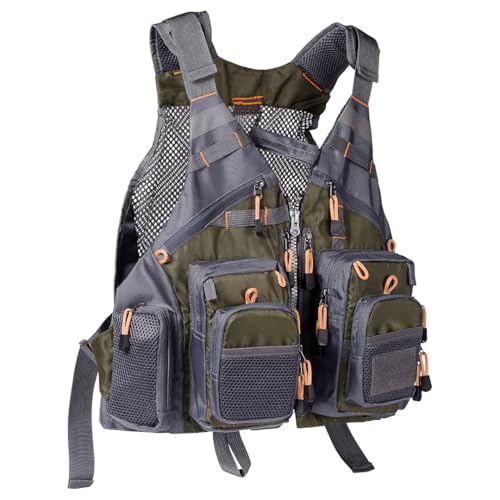
Bassdash Strap Fishing Vest
A strap vest holds the whole list in front of you where you can reach it one handed, which is the only place gear is useful while you are standing in a river. Cheap enough that the money goes into the tippet and the belt instead.
Best for: A first season, wading rivers, and anyone who hates the heat of a full vest.

Fly Fishing Nippers with Retractor and Knot Tool
A worn nipper crushes tippet rather than cutting it, and a crushed end will not thread a small hook eye. The retractor is what stops it living at the bottom of a pocket or on the riverbed.
Best for: Everyone, and the first item to replace when threading a fly gets mysteriously hard.

Smith Creek Wading Belt, universal
The cheapest safety item in the sport. It does not make waders unsinkable, it slows the flooding that fills the legs with many pounds of water and takes away your ability to swim or climb out.
Best for: Every angler who owns waders, on every single trip, cinched snug.

SF Waterproof Slit Foam Fly Boxes, 2 pack
Slit foam holds hooks separated so they do not tangle, and a clear lid means you find the pattern without opening every box in the wind. Dry the box before closing it or you will open a row of rusted hooks.
Best for: Splitting dries from nymphs so you are not hunting through one enormous box.

Aventik Fly Fishing Stream Thermometer
Water temperature tells you when trout will feed, when to stop fishing them in warm water for their sake, and how much of a hazard a swim would be. It is the cheapest piece of real information you can carry.
Best for: Anyone fishing across a whole season rather than one warm stretch of it.

Fishpond Summit Sling 2.0
A sling swings around to the front to work from and sits on your back the rest of the time, which is the best compromise between access and not wearing a shelf on your chest all day.
Best for: Anglers who walk a long way between pools and want the weight off their neck.
Skip it if: A first season. A strap vest at a fraction of the price carries the same list, and nobody has ever caught fewer fish because of their pack.
Specs are the manufacturer's published figures. Prices and stock change constantly, so confirm on the retailer page. We earn commissions from Backcountry and from qualifying Amazon purchases.
Frequently asked questions
What do beginners most often forget on a fly fishing trip?
Floatant, spare leaders, and a spare tippet spool in the size they actually use. All three fail the same way: they are consumed rather than owned, so they run out silently and nobody checks them the way they check a rod. After those, the usual list is the licence, sunscreen and a dry spare car key. None of them are expensive and all of them can end a day early.
Do I need a vest, a sling or a chest pack?
Any of them, as long as everything is reachable one handed while you are standing in current. A strap vest is the cheapest and coolest in warm weather. A sling swings to the front to work from and rides on your back the rest of the time. A chest pack keeps everything in view but sits in front of you all day. Choose on how far you walk and how hot your season is.
Why carry a water thermometer?
Because temperature decides both the fishing and the hazard. Trout feed in predictable temperature windows and become stressed in warm water, so a thermometer tells you when to move on or stop fishing them altogether. It also tells you what a swim would actually mean, since cold water removes fine motor control within minutes regardless of how strong a swimmer you are.
How many fly boxes do I actually need?
Two is the sensible working number for trout: one for dries and emergers, one for nymphs and streamers. Splitting them that way means you are not searching a single huge box in the wind, and it halves what you lose if a box goes in the river. Slit foam holds hooks separated, and the box must be dry before you close it or the hooks rust.
What safety items belong on a river checklist?
A wading belt cinched snug, polarised sunglasses as eye protection against a hook, a hat with a brim, a whistle reachable one handed, a phone in a sealed bag, and somebody who knows where you went and when you are due back. A wading staff on unfamiliar or freestone water and an inflatable PFD on big or cold water are the two worthwhile additions.
Should I keep a separate car checklist?
Yes, and it should be short: full change of dry clothing, a towel, water, and a spare key kept somewhere other than a wader pocket. Everything on that list exists for the trip where something went wrong. Cold water impairs your judgement about how cold you are, so the dry clothes matter even on a day you finish feeling fine.
How we choose: we compare published manufacturer specifications, line and leader standards, and verified owner reviews across retailers. We do not test gear in person, and every diameter, grain weight and breaking strength quoted here is the manufacturer's published figure unless we say otherwise, so check the spool label before you trust a number. Nothing here is professional instruction. Wading moving water is the real hazard in this sport: wear a snug wading belt, know the water temperature, and turn back rather than push through a crossing you are unsure of.